by Admin | Jun 18, 2021 | Chronicles, News
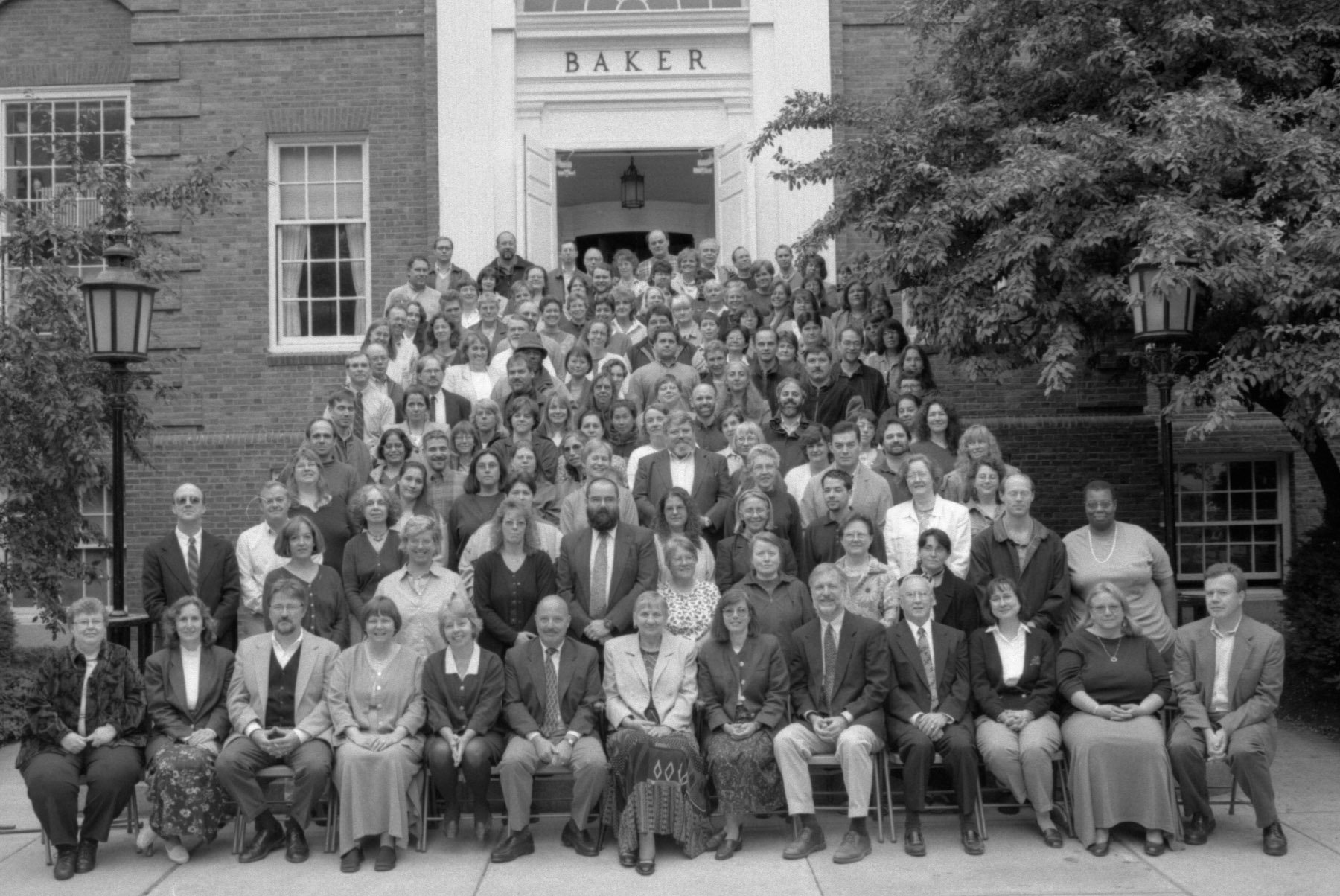
This week in The History of AI at AIWS.net – the Dartmouth Conference began on 18 June 1956. This gathering would run through the entire summer at Dartmouth College in Hanover, New Hampshire.
The Dartmouth Conference was originally dreamt up by John McCarthy, Marvin Minsky, Nathaniel Rochester, and Claude Shannon. They envisioned a workshop to connect computer and information sciences with the brain. In addition to asking for funding, they also determined that Dartmouth College was the location to host such event.
At the actual event, various attendees came and go throughout the (approximate) eight weeks the workshop ran for. On weekdays, the participants had the top floor of the Mathematics Department at Dartmouth College to present their ideas, as well as having general discussions held. Participants and members (outside of the authors) of the discussions and presentations included, but not limited to, Ray Solomonoff, Arthur Samuel, Herbert Simon, Allen Newell, and Oliver Selfridge.
This event marks one of the beginnings of AI – the conception of what AI is and AI could be. Without a seminal event like this, AI would not exist or may have taken a different direction entirely. Thus, the HAI project considers the Conference an event in the History of AI.
by Admin | Jun 10, 2021 | Chronicles, News
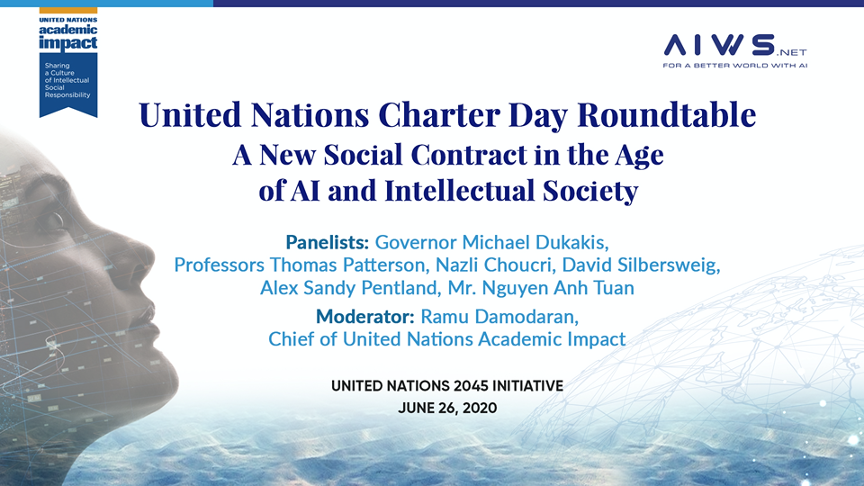
This week in The History of AI at AIWS.net – The UN Charter Day Roundtable: A Social Contract in the Age of AI and Intellectual Society was hosted on June 26, 2020.
The roundtable was an event of the UN to discuss the Social Contract 2020 (A New Social Contract in the Age of AI), as well as other new concepts and terms such as “Intellectual Society.” Participants of this roundtable were Governor Michael Dukakis, Nguyen Anh Tuan, professors Thomas Patterson, Nazli Choucri, Alex Pentland, and David Silbersweig. The moderator was Ramu Damodaran, Chief of United Nations Academic Impact, Editor in Chief of The United Nations Chronicle.
This roundtable, albeit happening just in the past year, is a contributing stone to the foundation and the road to the Social Contract 2020, which was released later that year. Thus, the HAI project considers this a milestone in the development of artificial intelligence, in broader society.
by Admin | Jun 3, 2021 | Chronicles, News
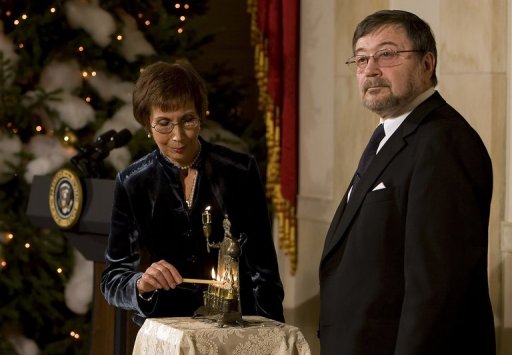
This week in The History of AI at AIWS.net – Judea Pearl receives the ACM Turing Award 2011 on 16 June, 2012. He was chosen by ACM for his contributions to the field of Artificial Intelligence, most notably probabilistic and causal reasoning.
The Turing Award is one of the most prestigious awards in the field, often considered the Nobel Prize of Computer Science. ACM, the Association for Computer Machinery, began giving out the award in 1966, whose first recipient was Alan Perlis. The award was named after Alan Turing, who is widely considered the father of computer science and Artificial Intelligence. Other winners include Marvin Minsky, John McCarthy, Yoshua Bengio, Geofrrey Hinton, and Yann LeCun, all that made enormous contributions to computer science and Artificial Intelligence.
Judea Pearl is a renowned Israeli-American computer scientist. He is a pioneer into Baynesian networks, probabilistic approaches to AI, and causal inference. He is also known for his books, Probabilistic Reasoning in Intelligent Systems (1988), Causality: Models, Reasoning, and Inference (2000), and The Book of Why: The New Science of Cause and Effect (2018). Pearl is a Chancellor’s Professor at UCLA.
Due to the impact that Judea Pearl had on Artificial Intelligence, specifically in terms of Causal Inference, the History of AI initiative considers it an important marker in AI history. Professor Judea Pearl is one of the most influential computer scientists around the world. He is also a Mentor of AI World Society Innovation Network (AIWS.net). Professor Pearl resides on the History of AI Board. He was honored as 2020 World Leader in AI World Society by Michael Dukakis Institute and the Boston Global Forum.
by Admin | May 29, 2021 | Chronicles, News
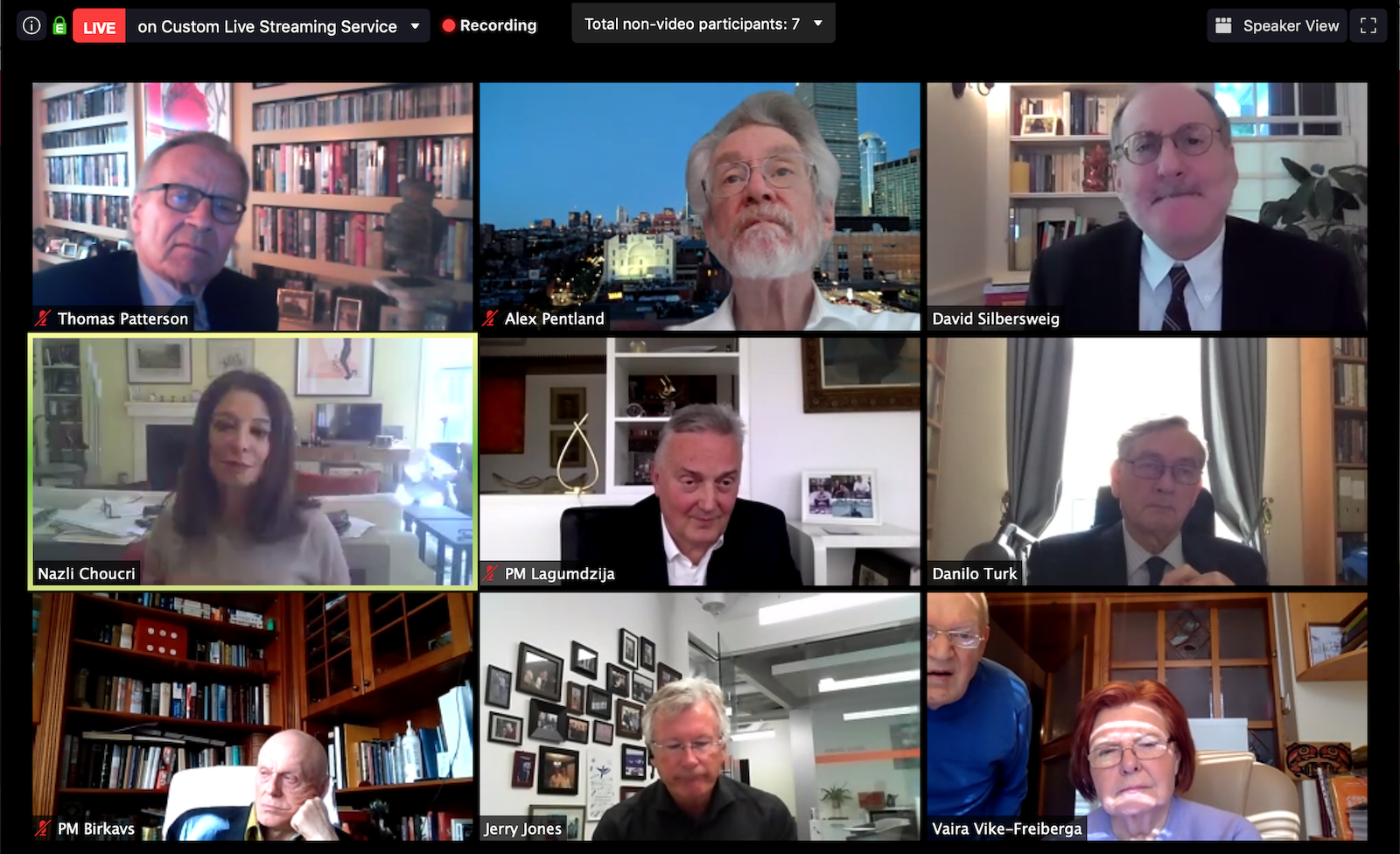
This week in The History of AI at AIWS.net – the World Leadership Alliance Club de Madrid organized the Online Roundtable “A New Social Contract in the Age of AI” on May 12, 2020.
The Roundtable was organized by the WLA-CdM in conjunction with Boston Global Forum. Panelists of the roundtable included professors and former head of states and governments. Members include the authors of the Social Contract 2020 – Thomas Patterson, Nazli Choucri, Alex Pentland, David Silbersweig, and Nguyen Anh Tuan. The full working title of this was “The Social Contract 2020, A New Social Contract in the Age of AI”.
This roundtable, albeit happening just in the past year, is a contributing stone to the foundation and the road to the Social Contract 2020, which was released later that year. Thus, the HAI project considers this a milestone in the development of artificial intelligence, in broader society.
by Admin | May 21, 2021 | Chronicles, News
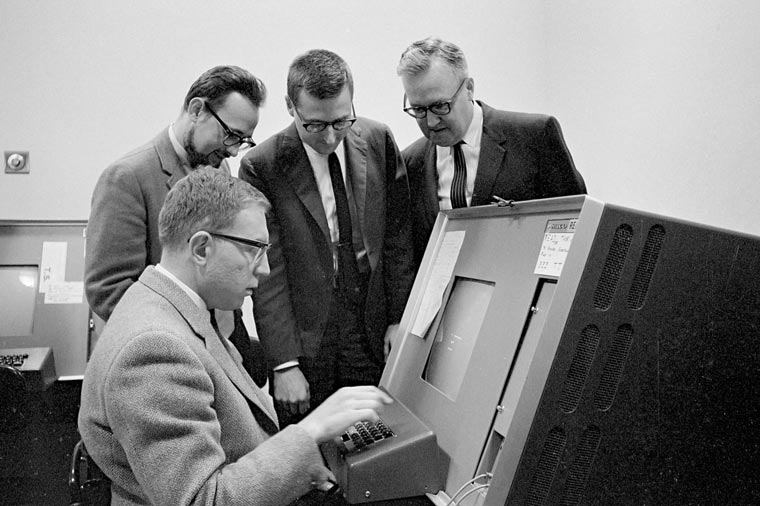
This week in The History of AI at AIWS.net – Edward Feigenbaum formally introduces expert systems in 1965. He was a part of the Stanford Heuristic Programming Project, which contained other notable AI pioneers.
Edward Feigenbaum is an American computer scientist focused on Artificial Intelligence. He studied at Carnegie Mellon University for both his B.S. and Ph.D., with Herbert Simon, an AI pioneer, as his doctoral advisor. He would go on to work at UC Berkeley and Stanford, the latter where he became Professor Emeritus of Computer Science (since 2000). Feigenbaum received the ACM Turing Award in 1994 with Raj Reddy for pioneering in AI and demonstrating its commercial potential.
The Stanford Heuristic Programming Project included members outside of Edward Feigenbaum such as Bruce G. Buchanan, Joshua Lederberg, and Carl Djerassi. They are most notable for the MYCIN experiments. Many of their papers and research can be read here.
Expert systems would become the basis for future AI products and developments. Furthermore, the members who were a part of this project would also work on other pioneering projects in A. Thus, the HAI initiative sees this event as a marker in the history of AI.