by Admin | Apr 9, 2021 | Chronicles, News
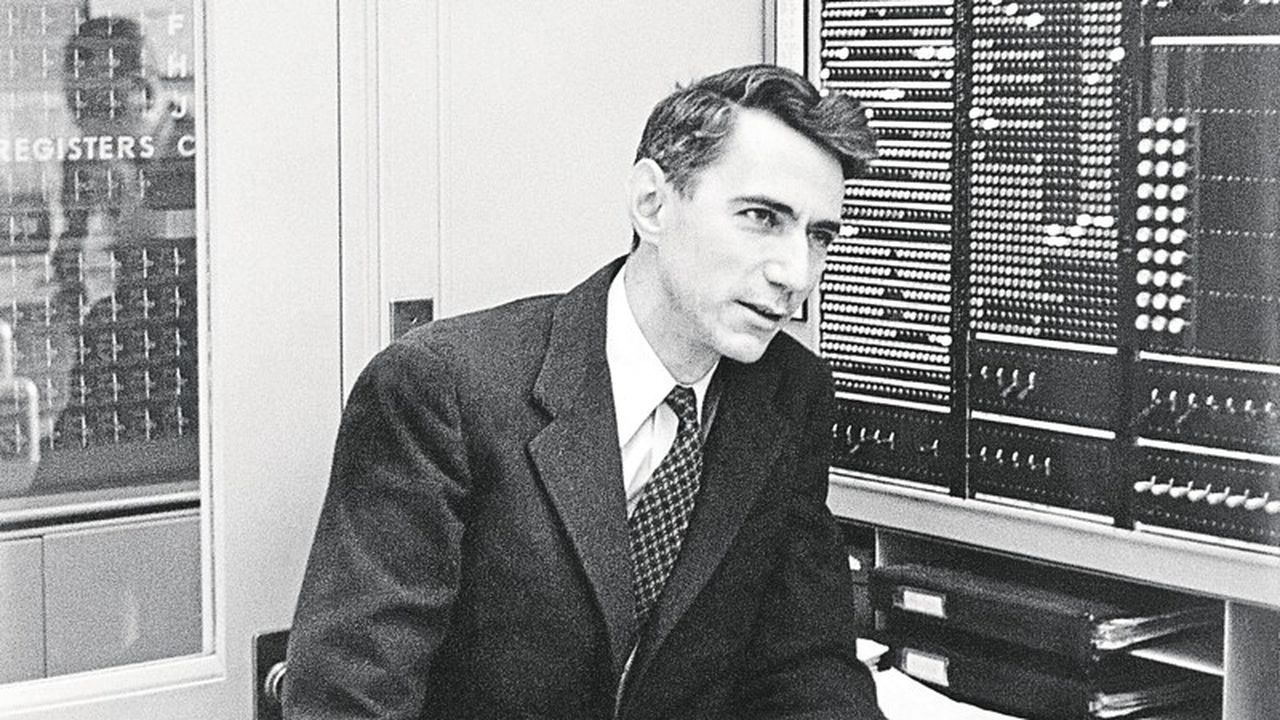
This week in The History of AI at AIWS.net – Claude Shannon was born on 30 April, 1916. He is recognized as the father of Information Technology. Shannon also participated and was a part of the inception of the Dartmouth Conference.
Claude Shannon was an American mathematician and electrical engineer. Shannon was born on 30 April, 1916 in Petoskey, Michigan, although he would spend most of his childhood at the nearby city Gaylord. He studied at the University of Michigan for his undergraduate degree and went to MIT for his Master’s and Ph.D. During the Second World War, Shannon joined Bell Labs and helped contributed in cryptography. It was during this time that he came into contact with Alan Turing. In 1948, he published the paper “A Mathematical Theory of Communication,” which is credited with founding the field of IT. He would work as faculty at MIT starting in 1956 until 1978. Although most of his contributions are in IT and other various electrical-related fields, he did propose a workshop on AI and join it (the Dartmouth Conference) in 1956. Shannon passed away on 24 February, 2001.
The Dartmouth Conference was a workshop held at Dartmouth College in 1956 to brainstorm ideas on “thinking machines”. There was a proposal drawn up the year before for such a workshop by Marvin Minsky, Nathaniel Rochester, and Claude Shannon. Amongst those that attended the workshop were the writers of the proposal, Allan Newell, Herbert Simon, and John McCarthy. This event is widely noted as the founding event of AI.
Claude Shannon was a pivotal figure in the development of IT and AI, in addition to his participation in the Dartmouth Conference, which is considered one of the founding events of the study of Artificial Intelligence. Thus, the HAI initiative recognizes his birth as an event in the history of AI.
by Admin | Apr 2, 2021 | Chronicles, News
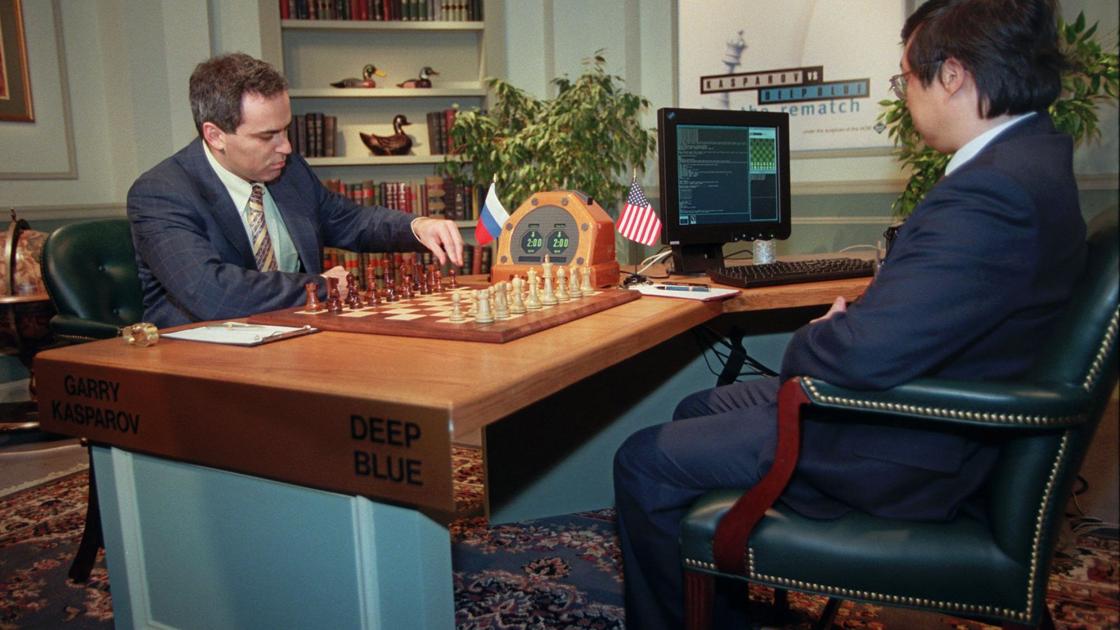
This week in The History of AI at AIWS.net – IBM “Deep Blue” machine defeats Garry Kasparov, the then-reigning World Chess Champion, at chess, in a highly-publicised match on 11 May, 1997. This date was the conclusion of 2 matches, one starting the year before, 1996.
The face-off began on February 10, 1996, in Philadelphia, Pennsylvania. Kasparov actually won this match 4-2. A year later in New York City, they would actually rematch, where Deep Blue defeated Kasparov 3.5-2.5. This rematch hosted a newer version of Deep Blue, dubbed “Deeper Blue”, that was upgraded after the first match. Deep Blue would also play against two other chess grandmasters. This battle was the subject of documentaries and talked about long after the match ended. It was speculated that the match was rigged in favour of IBM to boost their stocks.
IBM “Deep Blue” had its origins in a project by students at Carnegie Mellon University under the name ChipTest. It was later rebranded to Deep Thought. After these students graduated from Carnegie Mellon, they were asked by IBM to continue their research at the company. In 1989, it was renamed to Deep Blue after a competition. The machine was also helped in development by chess grandmaster Joel Benjamin. Deep Blue was released in 1996. After its rematch with Kasparov in 1997, it was dismantled. Its racks are held at the National Museum of American History and the Computer History Museum.
The HAI initiative considers this an event in the History of AI due to its impact on public perceptions of Artificial Intelligence. Similar to IBM’s public stunt with Jeopardy, this was also a display of the progress that AI has come from its heydays and origins in the 1960s.
by Admin | Mar 26, 2021 | Chronicles, News
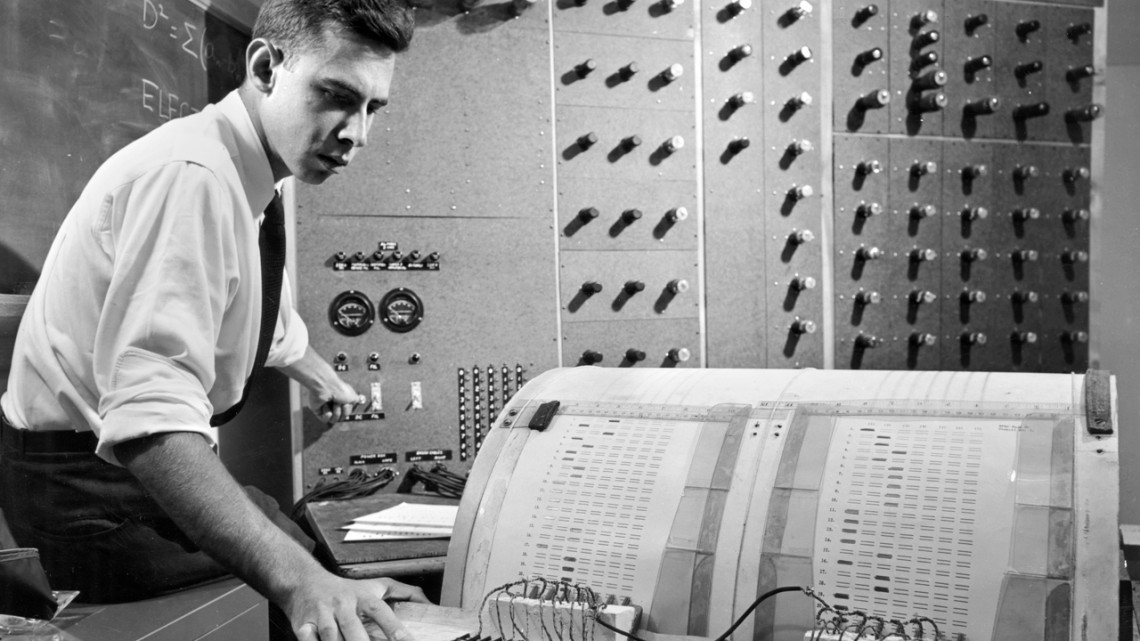
This week in The History of AI at AIWS.net – Frank Rosenblatt developed the Perceptron in 1957. It is a form of neural network that allowed pattern-recognition.
Frank Rosenblatt was an American psychologist. Born in 1928, Rosenblatt would go on to study at Cornell University for both his undergraduate studies and doctorate. He worked at Calspan, then the Cornell Aeronautical Laboratory, where he was a psychologist and became the head of one of the departments there. This lab is also where he would develop perceptrons. In 1959, he went to work at the Cornell campus on Ithaca, becoming a professor and director of programs. Rosenblatt passed away in 1970.
The Perceptron is a device that was built with biological principles ability to learn in mind. It was originally simulated on an IBM machine in 1957. Rosenblatt received media recognition and coverage for the Perceptron, with magazines such as the New Yorker proclaiming that it was “a remarkable machine… capable of what amounts to thought.” However, Marvin Minsky and Seymour Papert put a damper on the enthusiasm for Perceptrons when they published a book describing its limitations.
This development is considered an event in the history of AI since Perceptrons were seen as one of the precursors to artificial intelligence. It also displays the early thought and reception to the growing AI field. Thus, the HAI initiative considers this event one of the events in the History of AI.
by Admin | Mar 19, 2021 | Chronicles, News
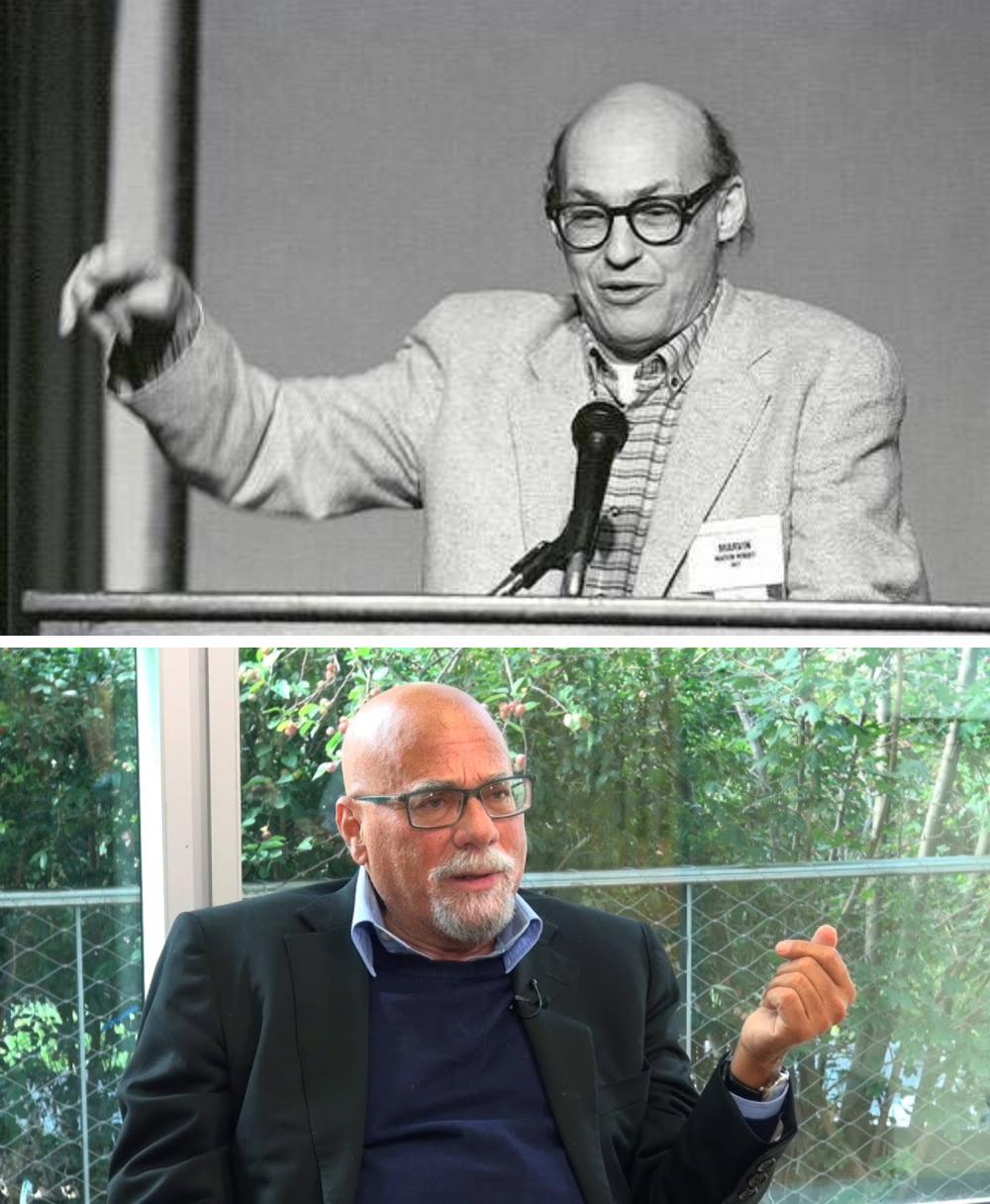
This week in The History of AI at AIWS.net – Marvin Minsky and Roger Schank warned of a second AI winter at a meeting of the American Assocation of Artificial Intelligence in 1984. Their prediction would come true 3 years later.
Marvin Minksy was an important pioneer in the field of AI. He penned the research proposal for the Dartmouth Conference, which coined the term “Artificial Intelligence”, and he was a participant in it when it was hosted the next summer. Minsky would also co-founded the MIT AI labs, which went through different names, and the MIT Media Laboratory. In terms of popular culture, he was an adviser to Stanley Kubrick’s acclaimed movie 2001: A Space Odyssey. He won the Turing Award for his influence on AI in 1969.
Roger Schank is an American psychologist and Artificial Intelligence scientist. He studied mathematics as an undergrad at Carnegie Mellon, before receiving a PhD at University of Texas (Austin) in linguistics. He went on to work at Stanford and Yale, before becoming a professor of computer science and psychology at Yale. He also received a $30 million grant to set up the Institute for the Learning Sciences at University of Chicago in 1989. Schank is known for pioneering conceptual dependency theory, a model used in AI systems, and case-based reasoning.
This warning is an event for the HAI as it showcases the build-up to a second AI winter, and the aftermath of the first one. It is also significant in that it features some of the pioneers in artificial intelligence.
by Admin | Mar 12, 2021 | Chronicles, News
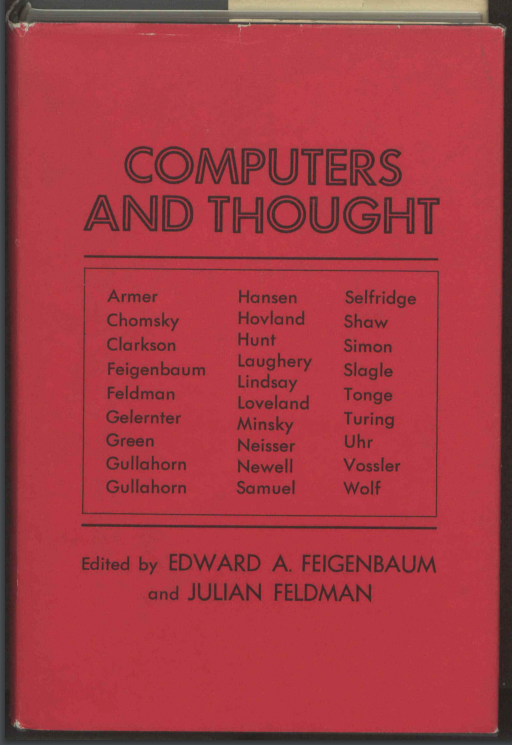
This week in The History of AI at AIWS.net – in 1963 Edward Feigenbaum and Julian Feldman published Computers and Thought, a book composed of articles on Artificial Intelligence, the first of its kind. Feigenbaum and Feldman edited and wrote some of the articles but they were not the the only contributors. Computers and Thought includes 20 articles from notable AI pioneers such as Alan Turing, Marvin Minsky, Allan Newell, Herbert Simon, and others.
Edward Feigenbaum is an American computer scientist focused on Artificial Intelligence. He studied at Carnegie Mellon University for both his B.S. and Ph.D., with Herbert Simon, an AI pioneer, as his doctoral advisor. He would go on to work at UC Berkeley and Stanford, the latter where he became Professor Emeritus of Computer Science (since 2000). Feigenbaum received the ACM Turing Award in 1994 with Raj Reddy for pioneering in AI and demonstrating its commercial potential.
Julian Feldman is an American computer scientist with an eye on Artificial Intelligence. Feldman studied at the University of Chicago for his undergrad; received an M.A. in political science; before going to Carnegie Mellon’s Graduate School of Industrial Administration for his Ph.D. He held a tenured position at UC Berkeley, before leaving it to help build UC Irvine, where he would create its Information and Computer Sciences department, the first ICS school in the UC system. Feldman also wrote papers and articles on connectionism, a fairly contentious topic within AI and computer science.
The HAI Initiative considers this book an important event in the history of AI due to its culmination of various thoughts on AI from its pioneers. Feigenbaum and Feldman themselves are also notable figures in the development of artificial intelligence.