by Admin | Dec 30, 2020 | News
NOMINATION
History of AI 2020
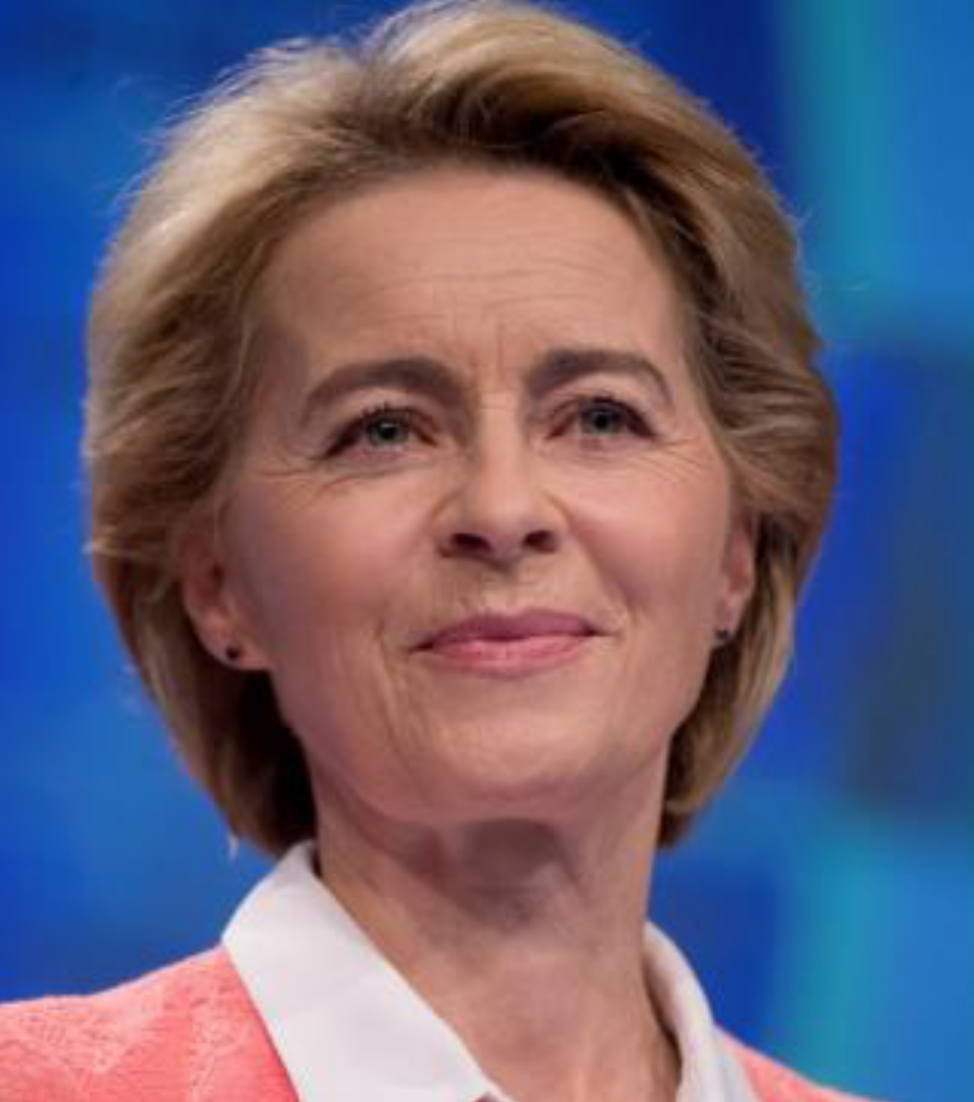
President Ursula von der Leyen
Trained as a physician, Ursula von der Leyen entered politics as a cabinet minister in the German state of Lower Saxony. When Angela Merkel became German chancellor in 2005, she appointed Dr. von der Leyen as Minister of Family Affairs and Youth, a portfolio that aligned with her work on women’s health.
After four years in that position, she was appointed Minister of Labor and Social Affairs. She was then appointed Minister of Defense, the first woman to hold that top post. Von der Leyen also had the distinction of being the longest serving minister of the Merkel government.
As incoming President of the European Commission, in December 2019 von der Leyen called for new rules for AI that respect human rights and public safety. At the 2019 G-20 Summit in Japan, Chancellor Angela Merkel earlier proposed “It will be the job of the next Commission to deliver something so that we have regulation similar to the General Data Protection Regulation that makes it clear that artificial intelligence serves humanity.”
In February 2020, President von der Leyen set out a White Paper on AI for public consultation. In the September 2020 State of the Union Address, she prioritized AI policy for the European Union. She said, “Whether it’s precision farming in agriculture, more accurate medical diagnosis or safe autonomous driving – artificial intelligence will open up new worlds for us.” Von der Leyen continued, “But this world also needs rules. We want a set of rules that puts people at the centre. Algorithms must not be a black box and there must be clear rules if something goes wrong. The Commission will propose a law to this effect next year. This includes control over our personal data which still have far too rarely today.”
And speaking to the Boston Global Forum on December 12, 2020, President von der Leyen called for a Transatlantic Agreement on AI, based on democratic values, including “human rights, pluralism, inclusion, and the protection of privacy.” For her pioneering leadership, she received the 2020 World Leader for Peace and Security Award.
President von der Leyen is also a tireless advocate for a more united Europe, a Europe that would assume a larger role in international diplomacy and security. A champion of democratic rights and institutions, she has contested the emergence of right-wing nationalism and state authoritarianism. She has pressed European countries to act collectively against COVID-19. She is committed to the Transatlantic Alliance, recognizing the collective responsibility of the EU and the US to advance global peace, security, and development.
A champion of democratic values, a trained scientist who places humanity at the center of AI innovation, President von der Leyen should be recognized for HAI 2020
Marc Rotenberg
by Admin | Dec 30, 2020 | News
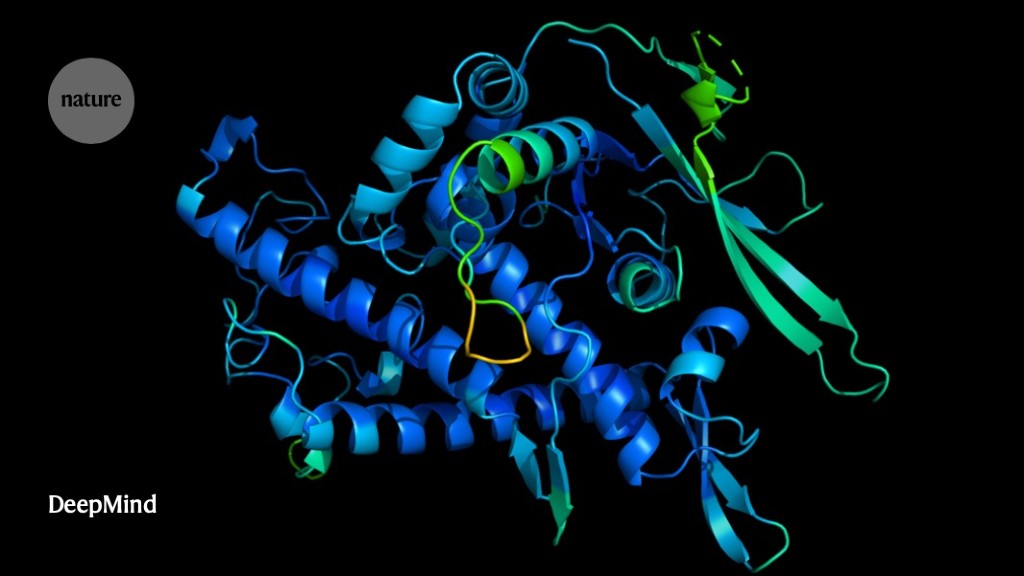
Towards the end of 2020, Google DeepMind announced that they developed an AI network (AlphaFold) that determines a protein’s 3D shape from its amino-acid sequence.
The ability to accurately predict protein structures from their amino-acid sequence would vastly accelerate efforts to understand the building blocks of cells and enable quicker and more advanced drug discovery. AlphaFold has been recognised as a solution to this grand challenge by the organisers of the biennial Critical Assessment of protein Structure Prediction (CASP).
CASP was founded in 1994 by Professor John Moult and Professor Krzysztof Fidelis as a biennial blind assessment to catalyse research, monitor progress, and establish the state of the art in protein structure prediction. It is considered the gold standard for assessing predictive techniques. After DeepMind’s revelation of its model and accuracy rate this year, Moult stated “In some sense the problem is solved.”
Professor Venki Ramakrishnan, the winner of the 2009 Nobel Prize for Chemistry said “this computational work represents a stunning advance on the protein-folding problem, a 50-year-old grand challenge in biology. It has occurred decades before many people in the field would have predicted.”
Merve Hickok
by Admin | Dec 30, 2020 | News
NOMINATION
History of AI 2020
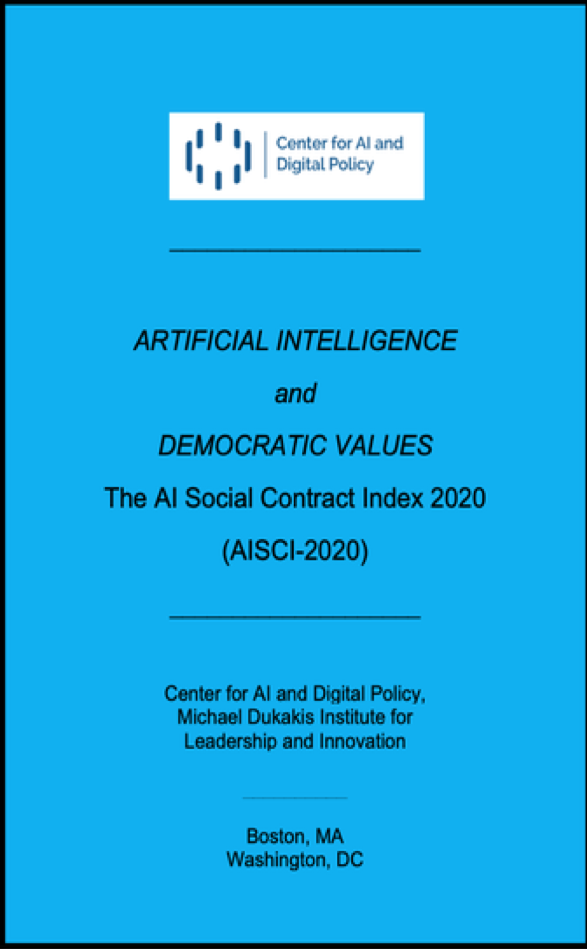
In the last days of 2020 Artificial Intelligence and Democratic Values: AISCI-2020 report was published. The report was prepared by the Center for AI and Digital Policy at the Michael Dukakis Institute and conducted by a team of international experts.
The report is first of its kind as a comparative review of national AI policies. 30 countries were reviewed in terms of their endorsement and implementation of OECD AI Principles within their national AI strategies and public implementations. It will serve as the baseline for future work and as one scholar (Mireille Hildebrandt) called it is “a trove of materials to enable mutual learning strategies instead of reinventing the wheel.”
The report also amplifies the AI Social Contract Index and CAIDP’s mission –“to promote a better society, more fair, more just —a world where technology promotes broad social inclusion based on fundamental rights, democratic institutions, and the rule of law.” It will pushes the boundaries and expectations from governments, and seeks seeks to build a multi-stakeholder, inclusive society in all aspects of life across politics, government, economics, business, and industry.
The methodology developed for the report draws on the work of international human rights organizations and data protection experts, and provides a clear ranking for each country. The AI Index 2020 encourages all countries to make real the promise of AI that is trustworthy, human-centric, and provides broad social benefit to all.
Merve Hickok
by Admin | Dec 20, 2020 | Chronicles
2020 was a special and eventful year, and yet it is ending, as we approach 2021. To cap off this memorable year, the History of AI Initiative at AIWS.net would like to receive your selections and choices for achievements, figures, and events in AI (including science technology, innovation, politics, policy, economy, cultures, society) in 2020:
- What are some historical achievements in AI in 2020?
- Who are notable and monumental figures in AI development in 2020?
- What are some pivotal events in AI history in 2020?
We would like to receive your selection before December 26, 2020. The History of AI Board will review your picks, then announce achievements, figures, and events of AI on December 31, 2020.
Please send your selection to [email protected]
Your selection will play an important role in this process. Thank you so much for your contribution.
by Admin | Dec 25, 2020 | Chronicles, News
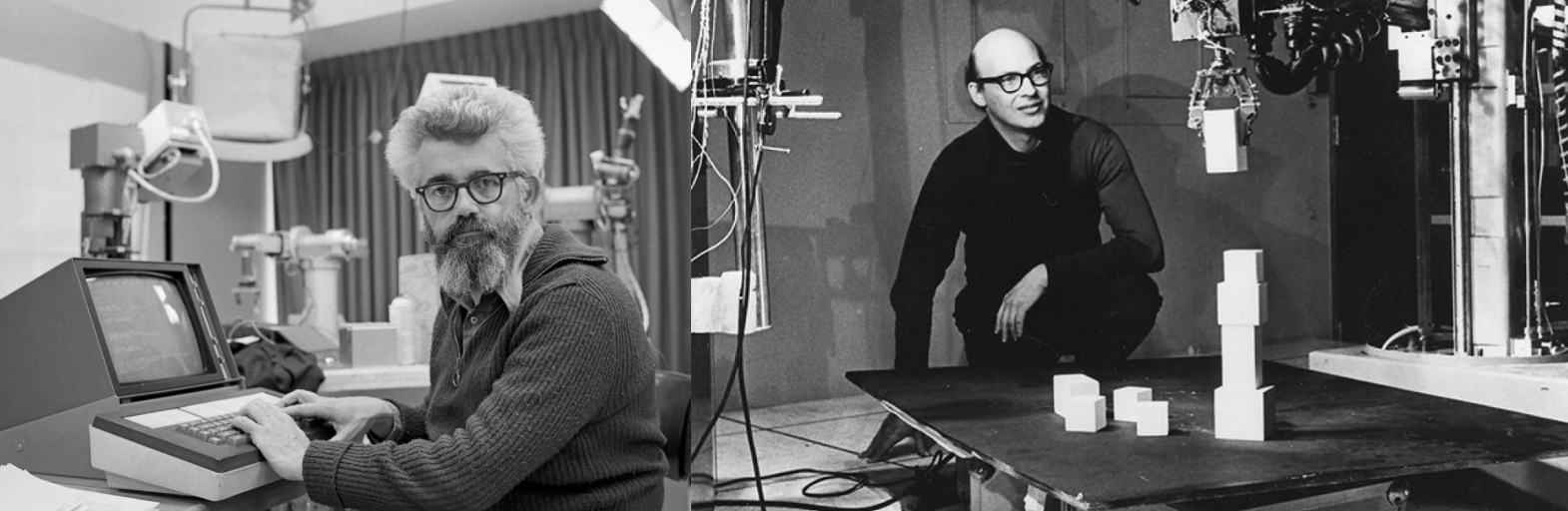
This week in The History of AI at AIWS.net – the MIT AI Lab was founded by John McCarthy and Marvin Minsky in 1959. This marked the beginning of coordinated AI research at MIT. The lab focused on researching and developing AI. The Lab went through several iterations and in 2003 merged with the Laboratory for Computer Science to become the MIT Computer Science and Artificial Intelligence Laboratory.
Marvin Minsky was an American cognitive and computer scientist. He penned the research proposal for the Dartmouth Conference, which coined the term “Artificial Intelligence”, and he was a participant in it when it was hosted in 1956. Minsky would make various contributions to the development of Artificial Intelligence. In terms of popular culture, he was an advisor to Stanley Kubrick’s acclaimed movie 2001: A Space Odyssey. He won the Turing Award in 1969.
John McCarthy was an American computer scientist. He, along with Minsky and others, co-wrote the proposal for the Dartmouth Conference, and participated in it. McCarthy also developed the Lisp programming language. Additionally, he also influenced various tasks in computer science. He spent most of his career at Stanford after working at Dartmouth and MIT. McCarthy won the Turing Award in 1971.
The History of AI Initiative considers the founding of the MIT AI Lab as an important event due to its role in the contribution to AI development. Furthermore, Marvin Minsky and John McCarthy are considered some of the founders of Artificial Intelligence research.
On this day and post, the HAI Initiative would like to wish readers a Merry Christmas and hope for the development of Artificial Intelligence to greater heights.