by Admin | Dec 30, 2020 | News
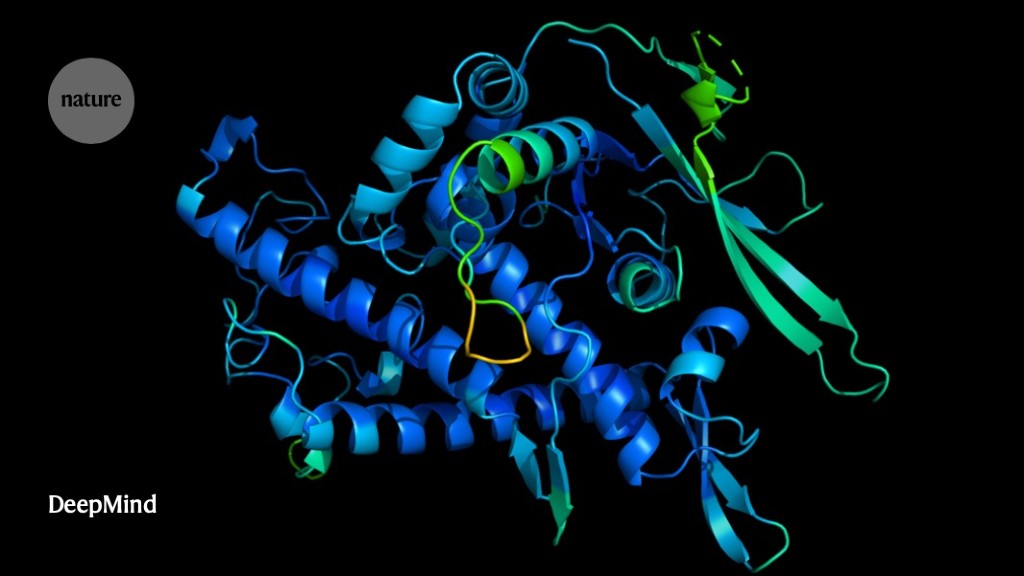
Towards the end of 2020, Google DeepMind announced that they developed an AI network (AlphaFold) that determines a protein’s 3D shape from its amino-acid sequence.
The ability to accurately predict protein structures from their amino-acid sequence would vastly accelerate efforts to understand the building blocks of cells and enable quicker and more advanced drug discovery. AlphaFold has been recognised as a solution to this grand challenge by the organisers of the biennial Critical Assessment of protein Structure Prediction (CASP).
CASP was founded in 1994 by Professor John Moult and Professor Krzysztof Fidelis as a biennial blind assessment to catalyse research, monitor progress, and establish the state of the art in protein structure prediction. It is considered the gold standard for assessing predictive techniques. After DeepMind’s revelation of its model and accuracy rate this year, Moult stated “In some sense the problem is solved.”
Professor Venki Ramakrishnan, the winner of the 2009 Nobel Prize for Chemistry said “this computational work represents a stunning advance on the protein-folding problem, a 50-year-old grand challenge in biology. It has occurred decades before many people in the field would have predicted.”
Merve Hickok
by Admin | Dec 30, 2020 | News
NOMINATION
History of AI 2020
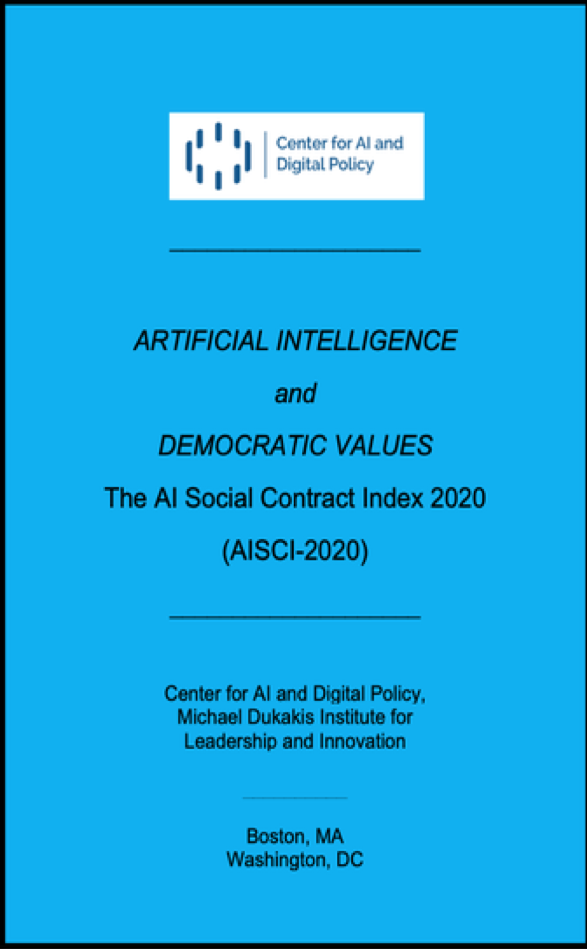
In the last days of 2020 Artificial Intelligence and Democratic Values: AISCI-2020 report was published. The report was prepared by the Center for AI and Digital Policy at the Michael Dukakis Institute and conducted by a team of international experts.
The report is first of its kind as a comparative review of national AI policies. 30 countries were reviewed in terms of their endorsement and implementation of OECD AI Principles within their national AI strategies and public implementations. It will serve as the baseline for future work and as one scholar (Mireille Hildebrandt) called it is “a trove of materials to enable mutual learning strategies instead of reinventing the wheel.”
The report also amplifies the AI Social Contract Index and CAIDP’s mission –“to promote a better society, more fair, more just —a world where technology promotes broad social inclusion based on fundamental rights, democratic institutions, and the rule of law.” It will pushes the boundaries and expectations from governments, and seeks seeks to build a multi-stakeholder, inclusive society in all aspects of life across politics, government, economics, business, and industry.
The methodology developed for the report draws on the work of international human rights organizations and data protection experts, and provides a clear ranking for each country. The AI Index 2020 encourages all countries to make real the promise of AI that is trustworthy, human-centric, and provides broad social benefit to all.
Merve Hickok

by Admin | Dec 30, 2020 | Chronicles
30.12.2020. Zlatko Lagumdzija
The History of AI event of 2020 – The Social Contract for the AI Age
Zlatko Lagumdzija
Former Prime Minister of Bosnia and Herzegovina
Member of World Leadership Alliance-Club de Madrid
Member of the History of AI Board
Social Contract for the AI Age can be named as the History of AI event of 2020 since it is offering transformative tools and means for creating complex elements and goals of great mosaic reflecting different perspectives in search for our prosperous and shared future.
Development of AI that is impacting our life and work with magnitudes bigger than any human invention in history is a clear sign of necessity and importance of a pioneering act such as the first Social Contract in the Internet and AI Age.
Fruits of Renaissance and Age of Enlightenment have been enjoyed by people because of great thinkers like Thomas Hobbes and Jean Jacques Rousseau who created the Social Contract concept as the leading doctrine of political legitimacy and platform for peace, security and democracy centuries ago.
Social Contract for the AI Age, as agreement among all stakeholders of society to work together for social benefit, is a comprehensive and impactful call to leaders to show wisdom and leadership using science and technology fruits in order to move our planet in the right direction.
Since September creation and adoption by 10 signatories coming from different backgrounds and experiences, under umbrella of the Boston Global Forum and AI World Society (AIWS), it has been endorsed, supported and called for implementation by the World Leadership Alliance – Club de Madrid and a long line of stakeholders from governments, academic, civil society and business leaders from various parts of the globe.
Social Contract for the AI Age is a pioneering, meaningful and impactful document since it is defining the purpose, vision and values that can be met by tools and means like AI is offering.
That is why Social Contract for the AI Age can help us to shape societies for a common purpose through transformative vision that transcends the technological features of AI and seeks to provide foundations for a progressive, new, better, and more prosperous society.
by Admin | Dec 25, 2020 | Chronicles, News
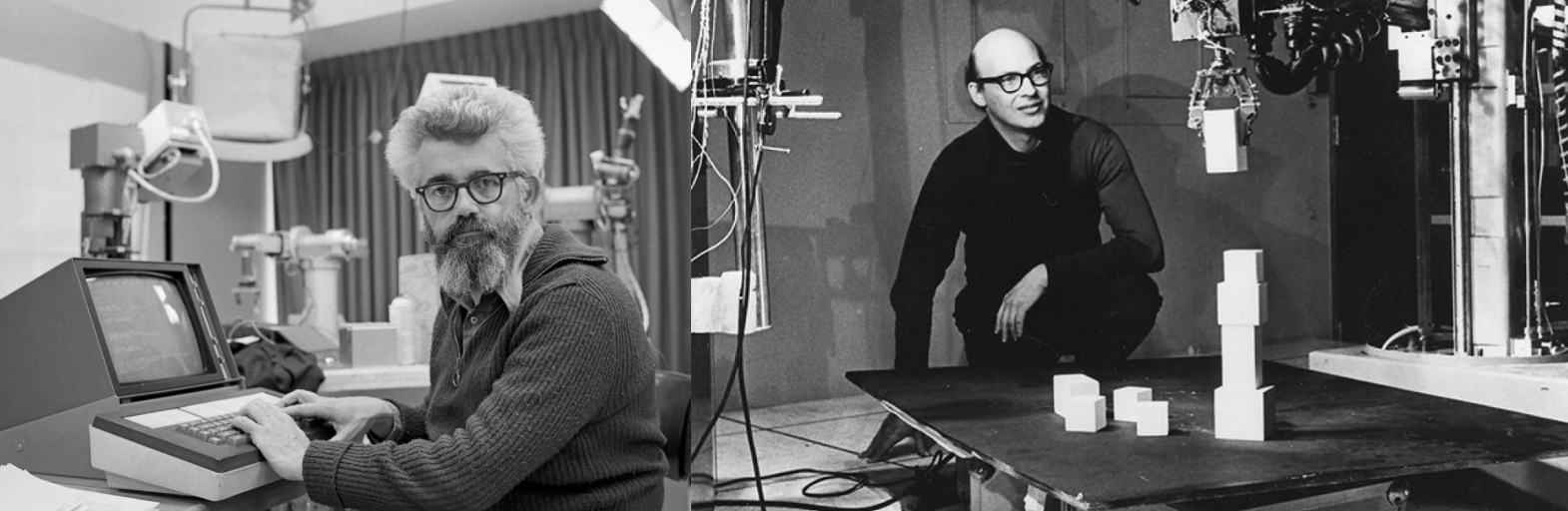
This week in The History of AI at AIWS.net – the MIT AI Lab was founded by John McCarthy and Marvin Minsky in 1959. This marked the beginning of coordinated AI research at MIT. The lab focused on researching and developing AI. The Lab went through several iterations and in 2003 merged with the Laboratory for Computer Science to become the MIT Computer Science and Artificial Intelligence Laboratory.
Marvin Minsky was an American cognitive and computer scientist. He penned the research proposal for the Dartmouth Conference, which coined the term “Artificial Intelligence”, and he was a participant in it when it was hosted in 1956. Minsky would make various contributions to the development of Artificial Intelligence. In terms of popular culture, he was an advisor to Stanley Kubrick’s acclaimed movie 2001: A Space Odyssey. He won the Turing Award in 1969.
John McCarthy was an American computer scientist. He, along with Minsky and others, co-wrote the proposal for the Dartmouth Conference, and participated in it. McCarthy also developed the Lisp programming language. Additionally, he also influenced various tasks in computer science. He spent most of his career at Stanford after working at Dartmouth and MIT. McCarthy won the Turing Award in 1971.
The History of AI Initiative considers the founding of the MIT AI Lab as an important event due to its role in the contribution to AI development. Furthermore, Marvin Minsky and John McCarthy are considered some of the founders of Artificial Intelligence research.
On this day and post, the HAI Initiative would like to wish readers a Merry Christmas and hope for the development of Artificial Intelligence to greater heights.