by Admin | Jul 30, 2022 | Chronicles, News
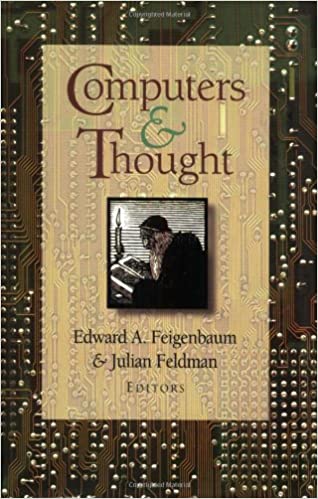
This week in The History of AI at AIWS.net – Edward Feigenbaum and Julian Feldman published Computers and Thought, a book composed of articles on Artificial Intelligence, the first of its kind, in 1963. Feigenbaum and Feldman edited and wrote some of the articles but they were not the the only contributors. Computers and Thought includes 20 articles from notable AI pioneers such as Alan Turing, Marvin Minsky, Allan Newell, Herbert Simon, and others.
Edward Feigenbaum is an American computer scientist focused on Artificial Intelligence. He studied at Carnegie Mellon University for both his B.S. and Ph.D., with Herbert Simon, an AI pioneer, as his doctoral advisor. He would go on to work at UC Berkeley and Stanford, the latter where he became Professor Emeritus of Computer Science (since 2000). Feigenbaum received the ACM Turing Award in 1994 with Raj Reddy for pioneering in AI and demonstrating its commercial potential.
Julian Feldman is an American computer scientist with an eye on Artificial Intelligence. Feldman studied at the University of Chicago for his undergrad; received an M.A. in political science; before going to Carnegie Mellon’s Graduate School of Industrial Administration for his Ph.D. He held a tenured position at UC Berkeley, before leaving it to help build UC Irvine, where he would create its Information and Computer Sciences department, the first ICS school in the UC system. Feldman also wrote papers and articles on connectionism, a fairly contentious topic within AI and computer science.
The HAI Initiative considers this book an important event in the history of AI due to its culmination of various thoughts on AI from its pioneers. Feigenbaum and Feldman themselves are also notable figures in the development of artificial intelligence.
by Admin | Jul 22, 2022 | Chronicles, News
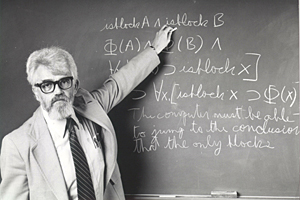
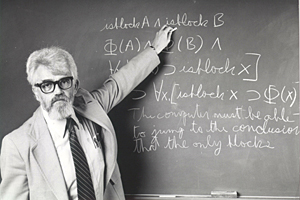
This week in The History of AI at AIWS.net – John McCarthy proposed the “advice taker” in his paper “Programs with Common Sense.” This hypothetical program was the first to use logic to represent information. The paper was published in 1959.
John McCarthy was an American computer scientist. He, along with Minsky and others, co-wrote the proposal for the Dartmouth Conference, and participated in it. McCarthy also developed the Lisp programming language. He spent most of his career at Stanford after working at Dartmouth and MIT. McCarthy won the Turing Award in 1971.
McCarthy wrote and published the paper while he was a part of the Computer Science at Stanford University. It can be viewed and downloaded here.
The HAI initiative considers this an event in the history of AI due to the paper being one of the earliest developments in artificial intelligence. Furthermore, John McCarthy is one of the pivotal figures in the growth of the field, having been there at the Dartmouth Conference.
by Admin | Jul 15, 2022 | Chronicles, News
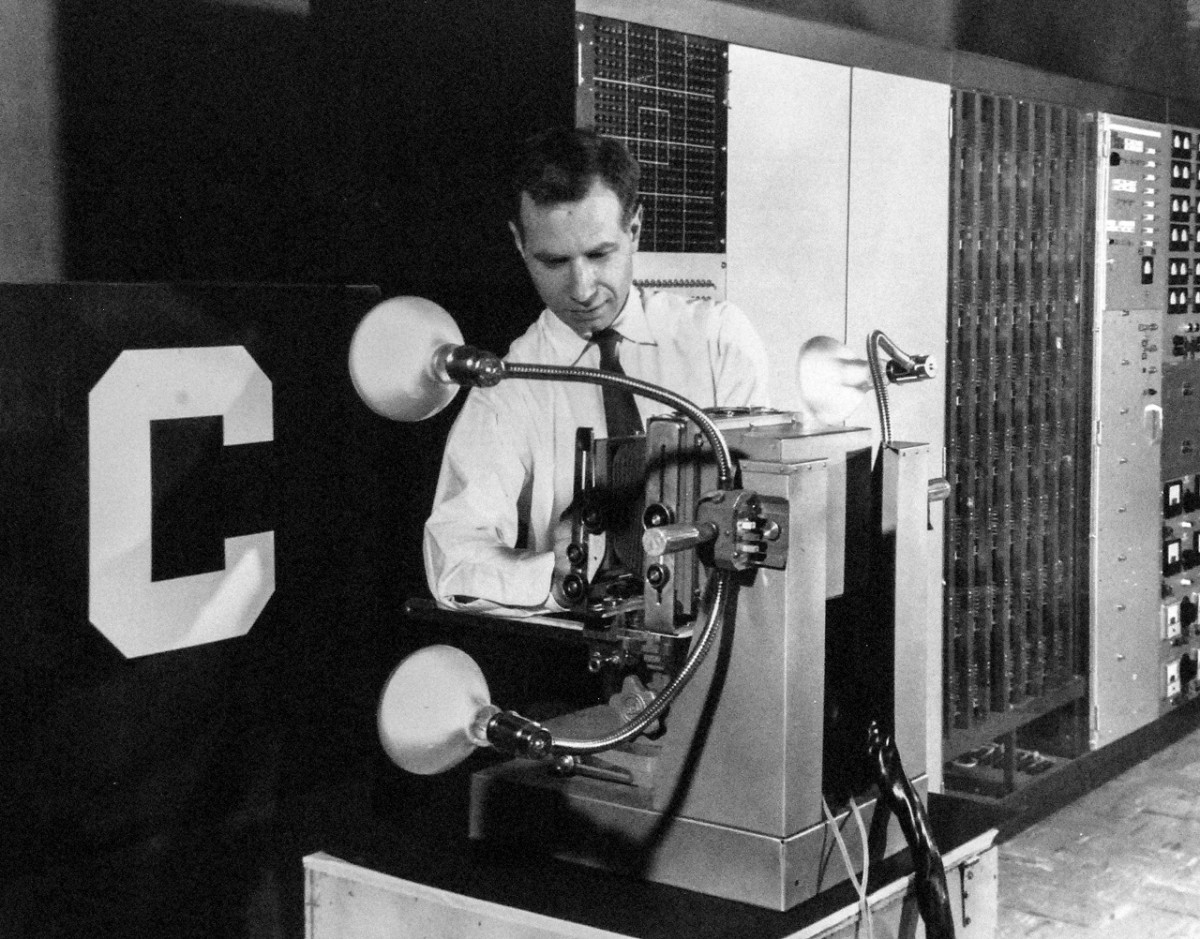
This week in The History of AI at AIWS.net – Frank Rosenblatt developed the Perceptron in 1957. It is a form of neural network that allowed pattern-recognition.
Frank Rosenblatt was an American psychologist. Born in 1928, Rosenblatt would go on to study at Cornell University for both his undergraduate studies and doctorate. He worked at Calspan, then the Cornell Aeronautical Laboratory, where he was a psychologist and became the head of one of the departments there. This lab is also where he would develop perceptrons. In 1959, he went to work at the Cornell campus on Ithaca, becoming a professor and director of programs. Rosenblatt passed away in 1970.
The Perceptron is a device that was built with biological principles ability to learn in mind. It was originally simulated on an IBM machine in 1957. Rosenblatt received media recognition and coverage for the Perceptron, with magazines such as the New Yorker proclaiming that it was “a remarkable machine… capable of what amounts to thought.” However, Marvin Minsky and Seymour Papert put a damper on the enthusiasm for Perceptrons when they published a book describing its limitations. The utility of Peceptrons is still discussed to this day, with some even claiming that it was ahead of its time.
This development is considered an event in the history of AI since Perceptrons were seen as one of the precursors to artificial intelligence. It also displays the early thought and reception to the growing AI field. Thus, the HAI initiative considers this event one of the events in the History of AI.
by Admin | Jul 10, 2022 | Chronicles, News
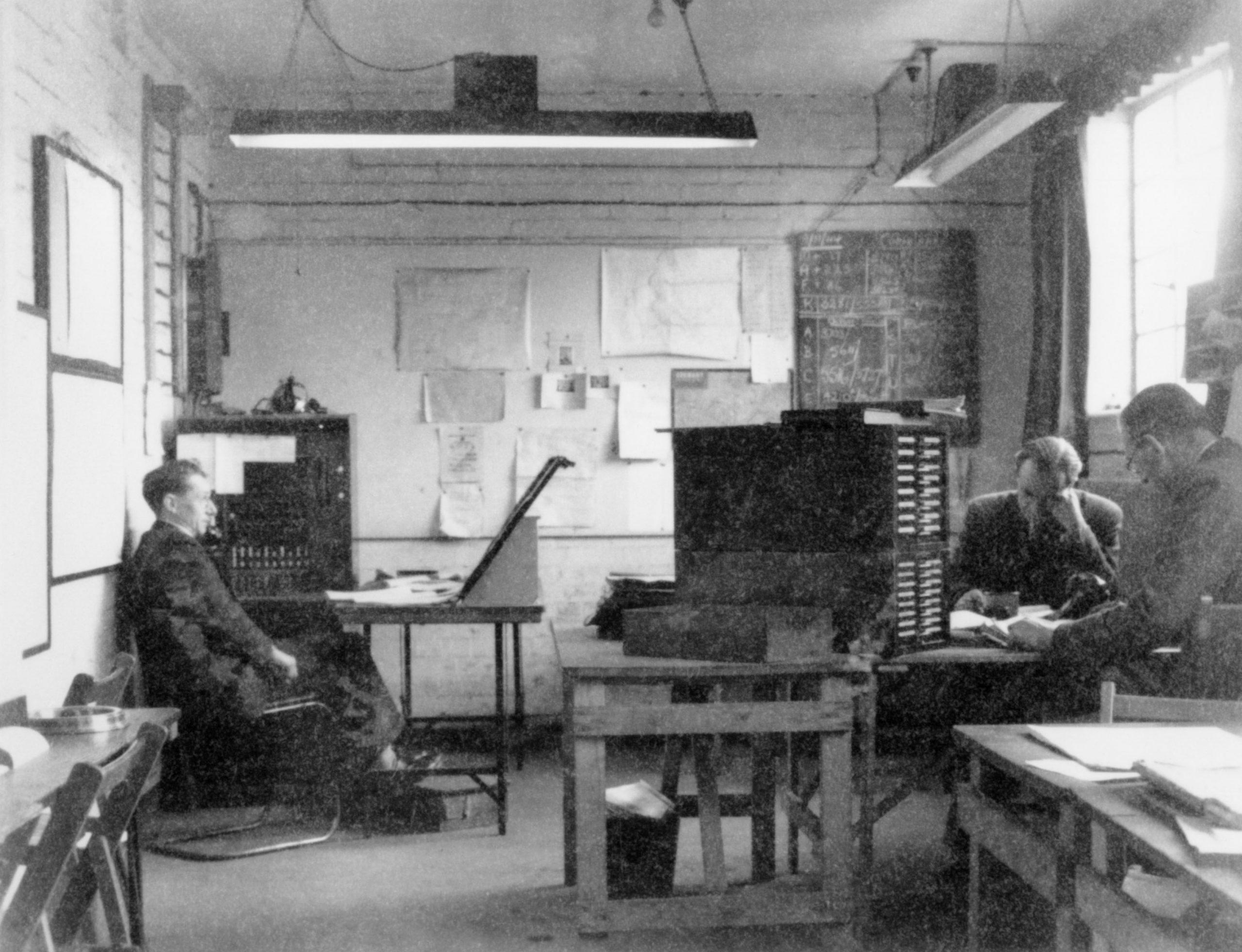
This week in The History of AI at AIWS.net – Bletchley Park cryptologists broke the German Enigma code on 9th July, 1941. Alan Turing, considered the founder of computer science and AI, played a vital role in this process in developing the Bombe.
Alan Turing was a British computer scientist and cryptanalyst. He developed the Turing machine, a model of a general-purpose computer, in 1936. During the Second World War, he worked at Bletchley Park (Government Code and Cyper School) as a codebreaker for the United Kingdom. At his time here, he would play a critical role in solving Enigma, Germany’s wartime infamous encryption system. Solving Enigma helped turning the tide of the war in favour of the Allies. After the war, he would go on to develop the Turing test in 1950. Alan Turing is widely considered the father of modern Artificial Intelligence, as well as being highly influential in theoretical computer science. The “Nobel Prize of Computing”, the ACM Turing Award, is named after him.
The History of AI initiative considers this event to be important due to Alan Turing being a pivotal figure in the development of Artificial Intelligence, computing, and machine learning. Furthermore, devices and methods used to help break the code are precursors to computers and AI. Thus, this development in the war is a critical moment in the History of AI.

by Admin | Jul 1, 2022 | Chronicles, News
This week in The History of AI at AIWS.net – The Democratic Alliance on Digital Governance Conference was hosted on July 1st, 2020. The subheading of this event was “Protecting and Strengthening Democracy in the Aftermath of COVID-19.”
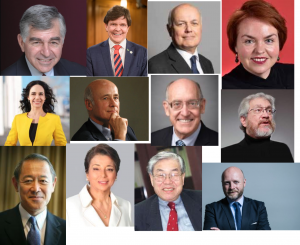
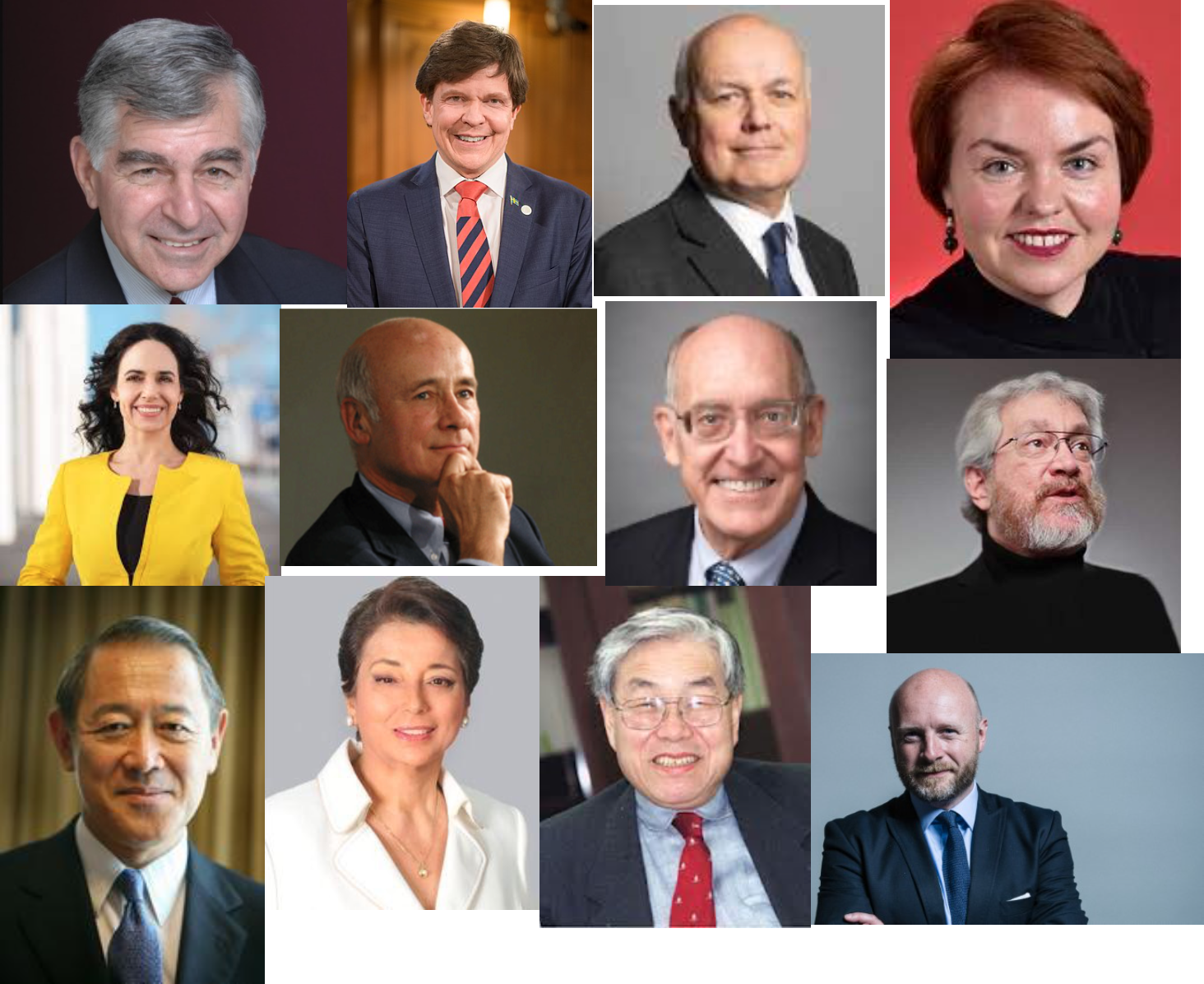
This conference was a collaboration between the Inter-Parliamentary Alliance on China (IPAC) and the Boston Global Forum. Leaders of the IPAC – Sir Iain Duncan Smith (UK), Senator Kimberley Kitching (AUS), and MEP Miriam Lexmann (CZ) – spoke and dialoged with political leaders and distinguished thinkers to build new alliances and new global economic strategies after the COVID-19 pandemic. The event was moderated by Governor Michael Dukakis. The Democratic Alliance is a part of the Social Contract 2020, A New Social Contract in the Age of AI.
This conference was a contributing stone to the foundation and the road to the Social Contract 2020, which was released later that year. Thus, the HAI project considers this a milestone in the development of artificial intelligence, in broader society and in the context of the global pandemic.