by Admin | Oct 29, 2021 | Chronicles, News
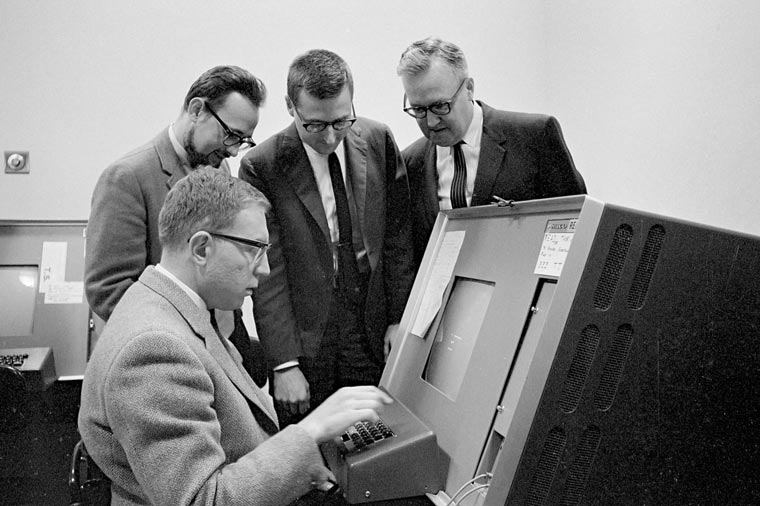
This week in The History of AI at AIWS.net – Edward Feigenbaum formally introduces expert systems in 1965. He was a part of the Stanford Heuristic Programming Project, which contained other notable AI pioneers.
Edward Feigenbaum is an American computer scientist focused on Artificial Intelligence. He studied at Carnegie Mellon University for both his B.S. and Ph.D., with Herbert Simon, an AI pioneer, as his doctoral advisor. He would go on to work at UC Berkeley and Stanford, the latter where he became Professor Emeritus of Computer Science (since 2000). Feigenbaum received the ACM Turing Award in 1994 with Raj Reddy for pioneering in AI and demonstrating its commercial potential.
The Stanford Heuristic Programming Project included members outside of Edward Feigenbaum such as Bruce G. Buchanan, Joshua Lederberg, and Carl Djerassi. They are most notable for the MYCIN experiments. Many of their papers and research can be read here.
Expert systems would become the basis for future AI products and developments. Furthermore, the members who were a part of this project would also work on other pioneering projects in A. Thus, the HAI initiative sees this event as a marker in the history of AI.
by Admin | Oct 22, 2021 | Chronicles, News
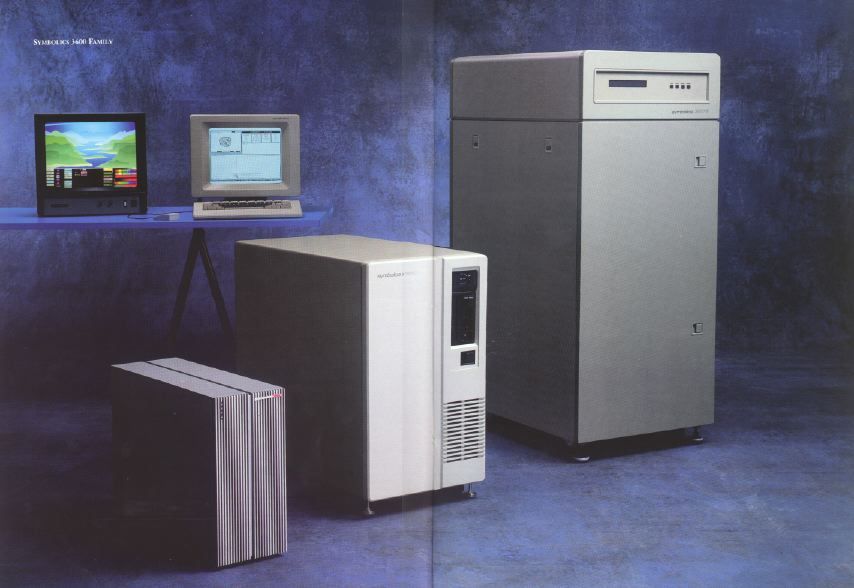
This week in The History of AI at AIWS.net – the sudden collapse of the market for specialised AI hardware in 1987. This is due to the fact that computers from Apple and IBM became more powerful than Lisp machines and other expert systems. In the 80s, specialised AI hardware such as Lisp machines became very popular due to its effectiveness in the corporate world. However they were expensive to maintain. By the end of the decade, computers by Apple and IBM had catched up with expert systems, per Moore’s Law, and also at a far cheaper price. Because now consumers no longer require the more expensive expert systems, there was a collapse for the market of such things.
This collapse of the market led to what is dubbed the Second AI Winter. The collapse coincided with the end of the 5th Generation Computer project of Japan and the Strategic Computing Initiative in the USA. The expensive nature of expert systems and the lack of demand led to slowdowns in development of that field. Companies that run Lisp went bankrupt or moved away from the field entirely. Thus, the winter spelled the end for expert systems as a major player in AI and computers.
Expert systems are computer systems that can emulate man’s decision-making abilities. They are designed to solve problems through reasoning and they can perform at the level of human experts. The first expert system was SAINT, developed by Marvin Minsky and James Robert Slagle. Lisp machines are designed to be able to run expert systems. Lisp machine runs the Lisp programming language, and in a way, it was one of the first commercial and personal workstation computer.
The fall of expert systems highlight lessons that are valuable for the History of AI and the current development of AI as well. It shows the failure to adapt by many in the AI field. The end of expert system in popular usage and the beginnings of the Second AI winter are also important milestones in the development of Artificial Intelligence. Thus, the HAI initiative consider this event an important marker in the history of AI.
by Admin | Oct 15, 2021 | Chronicles, News
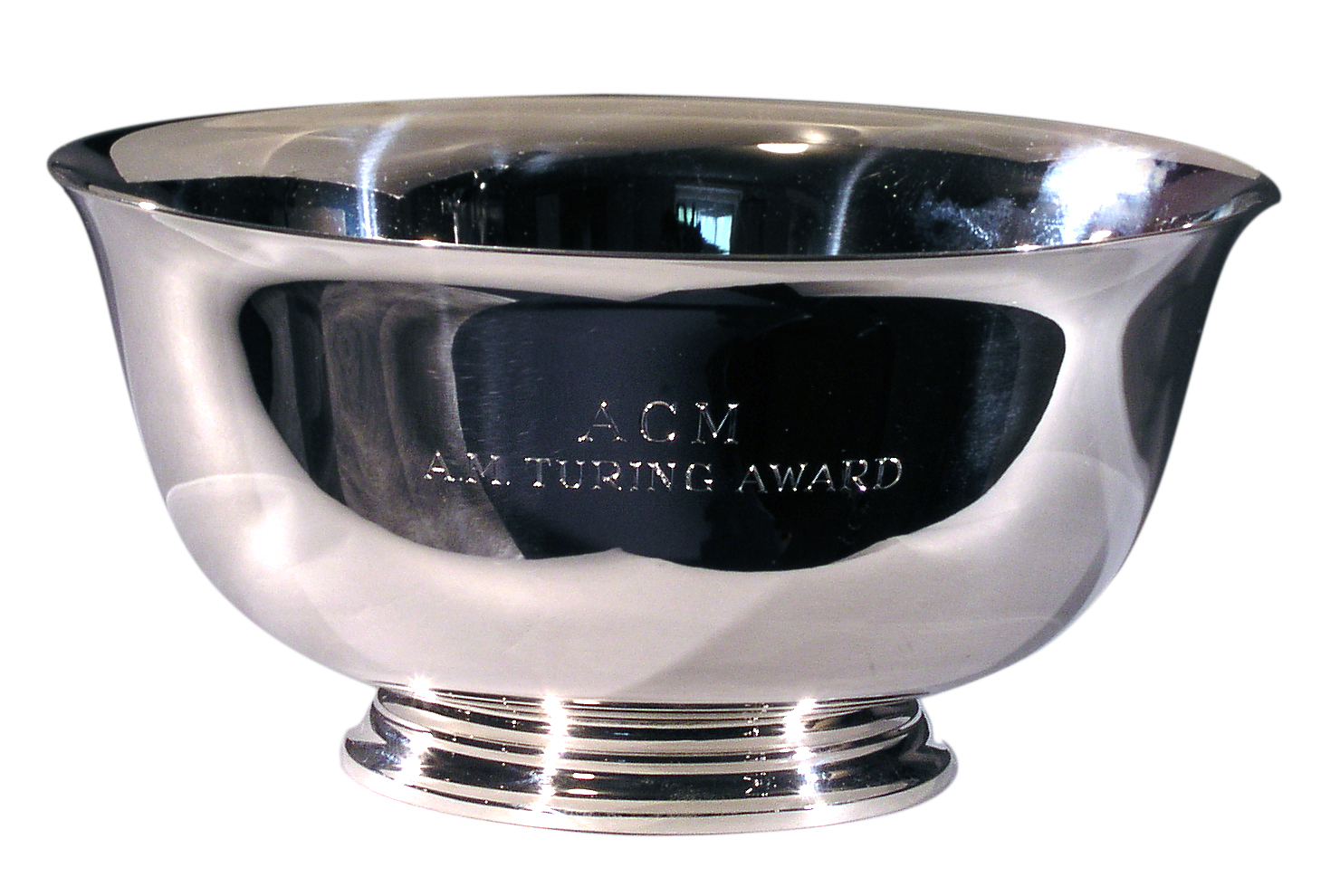
This week in The History of AI at AIWS.net – the ACM named Yoshua Bengio, Geoffrey Hinton, and Yann LeCun recipients of the Turing Award in 2018 for breakthroughs that made deep neural networks critical in computing. The Turing Award is one of the most prestigious awards in the field, as it is often considered the Nobel Prize of Computer Science. Other winners include Marvin Minsky and Judea Pearl, both of whom made enormous contributions to Artificial Intelligence.
Yoshua Bengio is a Canadian computer scientist, most notable for his works on neural networks and deep learning. He is an influential scholar, being one of the most cited computer scientists. In the 1990s and 2000s, he helped make deep advancements in the field of deep learning. Bengio is also a Fellow of the Royal Society.
Yann LeCun is a French computer scientist, renowned for his work on deep learning and artificial intelligence. He is also notable for contributions to robotics and computational neuroscience. He is the Silver Professor of the Courant Institute of Mathematical Sciences at NYU. In addition, LeCun is the Chief AI Scientist for Facebook.
Geoffrey Hinton is an English-Canadian cognitive psychologist and computer scientist. He is most notable for his work on neural networks. He co-authored the seminal paper on backpropagation, “Learning representations by back-propagating errors”, in 1986. He is also known for his work into Deep Learning. Hinton, along with Yoshua Bengio and Yann LeCun (who was a postdoctorate student of Hinton), are considered the “Fathers of Deep Learning”.
The History of AI Initiative considers this award and the recipients important because they play an important role in Deep Learning, which is a field of Machine Learning, part of Artificial Intelligence. It is an acknowledgement of how far AI has developed, and thus, is a part of the History of AI.
by Admin | Oct 8, 2021 | Chronicles, News
This week in The History of AI at AIWS.net – “Computing Machinery and Intelligence” by Alan Turing was published in the Mind quarterly academic journal in October 1950. It was the first instance that the “Turing test” was introduced to the public. The paper takes the question “Can machines think” and breaks it down. The paper also addresses 9 objections and arguments against Artificial Intelligence – Religious, “Heads in the Sands”, Mathematical, etc. Turing wrote about a potential “Learning Machine” that could successfully bypass the Turing test.
The Turing test, also known as the Imitation game, can be used to tell machines from humans. It poses a hypothetical, where a human evaluator would judge conversations between a machine designed for human-like responses and a human; if the evaluator cannot identify the machine from the human, then the machine passed the test. The test has proven to be both influential and controversial.
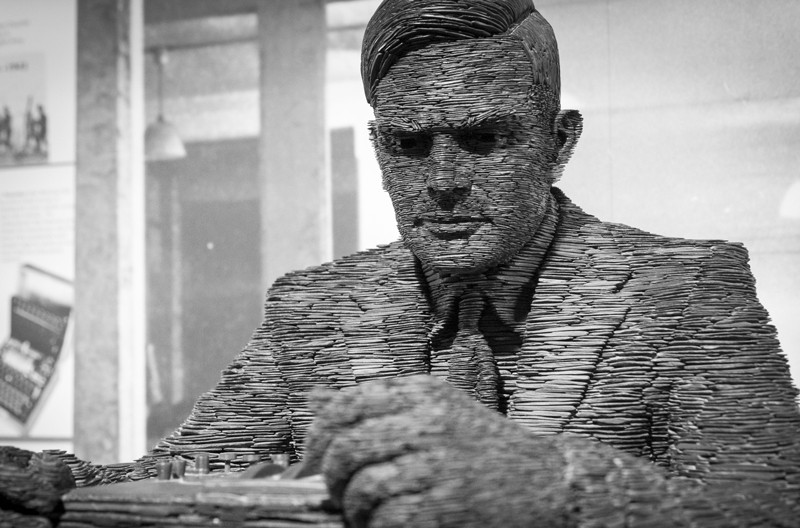
Alan Turing was a British computer scientist and cryptanalyst. He developed the Turing machine, a model of a general-purpose computer, in 1936. During the Second World War, he worked at Bletchley Park (Government Code and Cyper School) as a codebreaker for the United Kingdom. At his time here, he would play a critical role in solving Enigma, Germany’s wartime infamous encryption system. Solving Enigma helped turning the tide of the war in favour of the Allies. After the war, he would go on to develop the Turing test in 1950. Alan Turing is widely considered the father of modern Artificial Intelligence, as well as being highly influential in theoretical computer science. The “Nobel Prize of Computing”, the ACM Turing Award, is named after him.
The History of AI initiative considers this event to be important due to “Computing Machinery and Intelligence” being a seminal paper in regards to both Computer Science and AI.
The paper introduces many new concepts in CS and AI to the general public. Alan Turing is a pivotal figure in the development of Artificial Intelligence, computing, and machine learning as well. Thus, the publication of this paper is a critical moment in the History of AI.
by Admin | Oct 1, 2021 | Chronicles, News
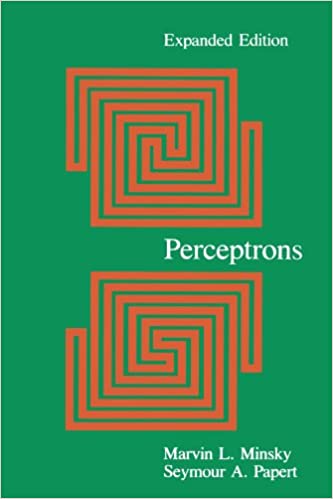
This week in The History of AI at AIWS.net – Marvin Minsky and Seymour Papert published an expanded edition of Perceptrons in 1988. The original book was published in 1969. The original book explored the concept of the “perceptron”, but also highlighted its limitations. The revised and expanded edition of the book added a chapter countering criticisms of the book made in the twenty years after its publication. The original Perceptrons were pessimistic in its predictions for AI, and was thought to have been a cause for the first AI winter.
Marvin Minksy was an important pioneer in the field of AI. He penned the research proposal for the Dartmouth Conference, which coined the term “Artificial Intelligence”, and he was a participant in it when it was hosted the next summer. Minsky would also co-founded the MIT AI labs, which went through different names, and the MIT Media Laboratory. In terms of popular culture, he was an adviser to Stanley Kubrick’s acclaimed movie 2001: A Space Odyssey. He won the Turing Award in 1969.
Seymour Papert was a South African-born mathematician and computer scientist. He was mainly associated with MIT for his teaching and research. He was also a pioneer in Artificial Intelligence. Papert was also a co-creator of the Logo programming language, which is used educationally.
The History of AI initiative considers this republication important because it revisited and furthered discourses on AI. The original book was also a cause for the first AI winter, a pivotal event in the history of AI. Furthermore, Marvin Minsky was one of the founders of AI. Thus, HAI sees Perceptrons (republished 1988) as meaningful in the development of Artificial Intelligence.
by Admin | Sep 25, 2021 | Chronicles, News
This week in The History of AI at AIWS.net – computer scientist James Robert Slagle developed SAINT in 1961. SAINT stands for Symbolic Automatic INTegrator. It was a heuristic program that could solve symbolic integration problems in freshman calculus. The machine was developed as a part of Slagle’s dissertation at MIT, with Marvin Minsky’s help. SAINT is considered the the first expert system. An expert system is a system that performs at the level of a human expert. SAINT was also one of the first projects that tried to produce a program that can come close to surpassing the Turing test as well.
James Robert Slagle is an American computer scientist. He worked on SAINT for his dissertation at MIT with Marvin Minsky. Slagle would receive his PhD in Mathematics from MIT later on in 1961. He’s a Professor in Computer Science with appointments in universities such as MIT, Johns Hopkins, UC Berkeley, and University of Minnesota.
Marvin Minsky also played a role in this project, as Slagle worked with him for this section of his dissertation. He would go on to be an important pioneer in the field of AI. He penned the research proposal for the Dartmouth Conference, which coined the term “Artificial Intelligence”, and he was a participant in it when it was hosted the next summer. Minsky would also co-founded the MIT AI labs, which went through different names, and the MIT Media Laboratory. In terms of popular culture, he was an adviser to Stanley Kubrick’s acclaimed movie 2001: A Space Odyssey. Minsky won the Turing Award in 1969.
The full dissertation can be found here. This project and dissertation is special in regard to AI, due to it being another step in its development, most notably for being the first expert system. Albeit it was only a minor project, the HAI initiative regards it as another pioneering attempt in the History of AI.
