by Admin | May 14, 2021 | Chronicles, News
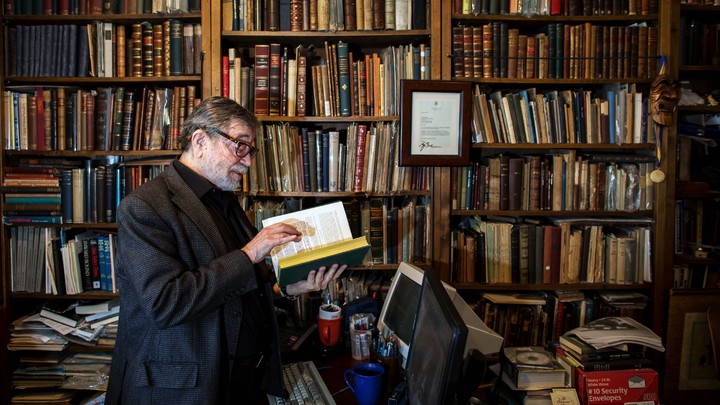
This week in The History of AI at AIWS.net – The Book of Why by Judea Pearl was published on 15 May, 2018. The book discusses causality and Bayesian probability, as well as their relations to fields such as AI and statistics.
Judea Pearl is a renowned Israeli-American computer scientist. He is a pioneer into Baynesian networks, probabilistic approaches to AI, and causal inference. He is also known for his other books, Probabilistic Reasoning in Intelligent Systems (1988) and Causality: Models, Reasoning, and Inference (2000). Professor Pearl won the Turing Award, one of the highest honours in the field of computer science, in 2011, for his works into AI through probabilistic and causal reasoning. He is a Chancellor’s Professor at UCLA.
The Book of Why (2018) can be bought through various booksellers such as Amazon and Barnes and Nobles, but further background information and supplementary materials can be found here.
Due to the impact that the book has, the History of AI initiative considers it an important marker in AI history. Professor Judea Pearl is one of the most influential computer scientists around the world. He is a Mentor of AI World Society Innovation Network (AIWS.net). Professor Pearl resides on the History of AI Board. He was honored as 2020 World Leader in AI World Society by Michael Dukakis Institute and the Boston Global Forum.
by Admin | May 7, 2021 | Chronicles, News
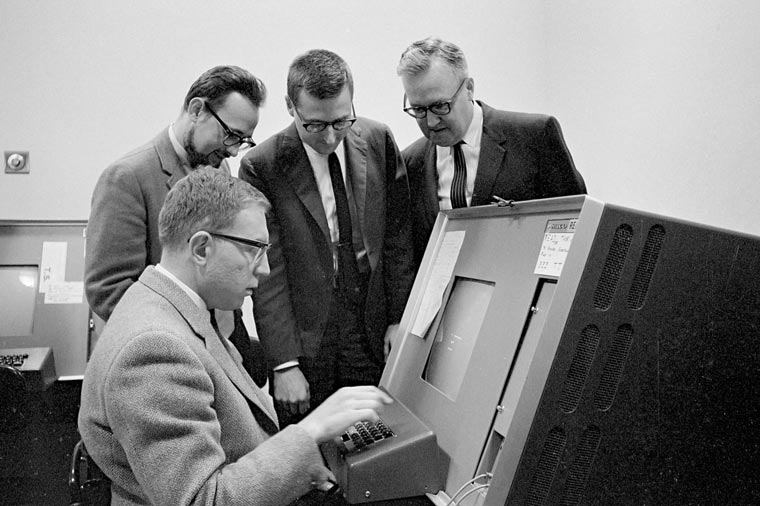
This week in The History of AI at AIWS.net – Edward Feigenbaum, Bruce G. Buchanan, Joshua Lederberg, and Carl Djerassi began work on Dendral in 1965. This was an AI project that later also became the first expert system.
Edward Feigenbaum is an American computer scientist focused on Artificial Intelligence. He studied at Carnegie Mellon University for both his B.S. and Ph.D., with Herbert Simon, an AI pioneer, as his doctoral advisor. He would go on to work at UC Berkeley and Stanford, the latter where he became Professor Emeritus of Computer Science (since 2000). Feigenbaum received the ACM Turing Award in 1994 with Raj Reddy for pioneering in AI and demonstrating its commercial potential.
Dendral was deveveloped at Stanford beginning in 1965, after the question “Can machines think?” became popularized. Led by Edward Feigenbaum, Bruce G. Buchanan, Joshua Lederberg, and Carl Djerassi, and assisted by associates and students, the project sought to study hypothesis formation and discovery in science. “Dendral” is a portmanteau of “Dendritic Algorithm”. Many expert systems that came after, such as XCON, were derived from Dendral.
The beginning of this project is considered an event in the history of AI due to the project itself contributing much to the development of AI. Dendral itself was both a culmination of past AI interests and the sparking of new ones. Thus, the HAI initiative sees the project as a marker in the history of AI.
by Admin | Apr 30, 2021 | Chronicles, News
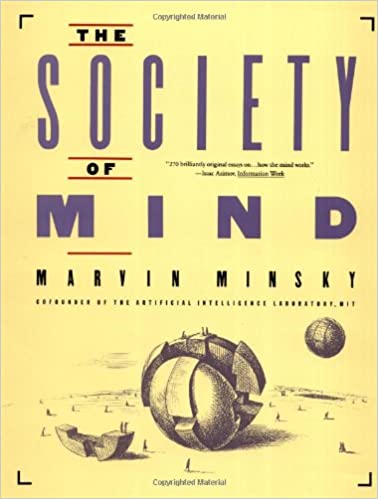
This week in The History of AI at AIWS.net – Marvin Minsky publishes The Society of Mind in 1987. This book is a theoretical description of the mind as a collection of cooperating agents.
Marvin Minsky was an American cognitive and computer scientist. He penned the research proposal for the Dartmouth Conference, which coined the term “Artificial Intelligence”, and he was a participant in it when it was hosted in 1956. Minsky would also make significant contributions to artificial intelligence, both in the study of the field and in popular culture. He won the Turing Award in 1969.
The Society of Mind is a book on the theory of “Society of Mind”, which came out of Marvin Minsky’s own thinking. In the book, Minsky describes the mind as a collection of mindless but cooperating “agents”. He first started developing the theory with Seymour Papert in the 1970s, but worked on it and published the book at a later point. The book is viewable at the Internet Archive.
Although the book does not directly reference or influence the development of artificial intelligence, it displays the theoretical dimensions of Marvin Minsky, the AI pioneer. The book also gives a glimpse into Minsky’s thinking in building artificial intelligence. Thus, the HAI initiative considers this an event in the history of AI.
by Admin | Apr 23, 2021 | Chronicles, News
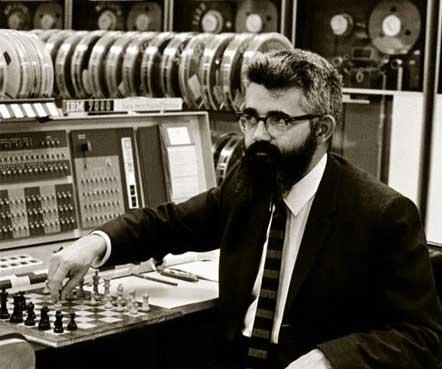
This week in The History of AI at AIWS.net – John McCarthy proposed the “advice taker” in his paper “Programs with Common Sense.” This hypothetical program was the first to use logic to represent information. The paper was published in 1959.
John McCarthy was an American computer scientist. He, along with Minsky and others, co-wrote the proposal for the Dartmouth Conference, and participated in it. McCarthy also developed the Lisp programming language. He spent most of his career at Stanford after working at Dartmouth and MIT. McCarthy won the Turing Award in 1971.
McCarthy wrote and published the paper while he was a part of the Computer Science at Stanford University. It can be viewed and downloaded here.
The HAI initiative considers this an event in the history of AI due to the paper being one of the earliest developments in artificial intelligence. Furthermore, John McCarthy is one of the pivotal figures in the growth of the field, having been there at the Dartmouth Conference.
by Admin | Apr 16, 2021 | Chronicles, News
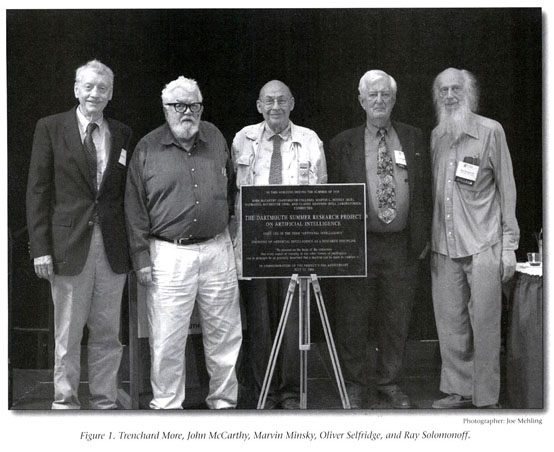
This week in The History of AI at AIWS.net – MIT receives a $2.2 million grant in June 1963 from DARPA, which was used to fund project MAC. This project included the AI Group of Marvin Minsky and John McCarthy.
DARPA is the Defense Advanced Research Projects Agency, a research and development agency of the American Department of Defense. It was founded on orders of President Eisenhower on February 7, 1958. The agency is responsible for helping the military develop emerging technologies. DARPA became a major sponsor of AI development, an example being the Strategic Computing Initiative.
Marvin Minsky was an American cognitive and computer scientist. He penned the research proposal for the Dartmouth Conference, which coined the term “Artificial Intelligence”, and he was a participant in it when it was hosted in 1956. Minsky would also make significant contributions to artificial intelligence, both in the study of the field and in popular culture.
He won the Turing Award in 1969. John McCarthy was an American computer scientist. He, along with Minsky and others, co-wrote the proposal for the Dartmouth Conference, and participated in it. McCarthy also developed the Lisp programming language. He spent most of his career at Stanford after working at Dartmouth and MIT. McCarthy won the Turing Award in 1971.
The HAI initiative considers this development an event in the history of AI, due to this funding allowing pioneers of the field to further their work and research. Most notably, MIT, Minsky, and McCarthy have contributed much to the advancement of artificial intelligence and other adjacent fields in computer science.
by Admin | Apr 9, 2021 | Chronicles, News
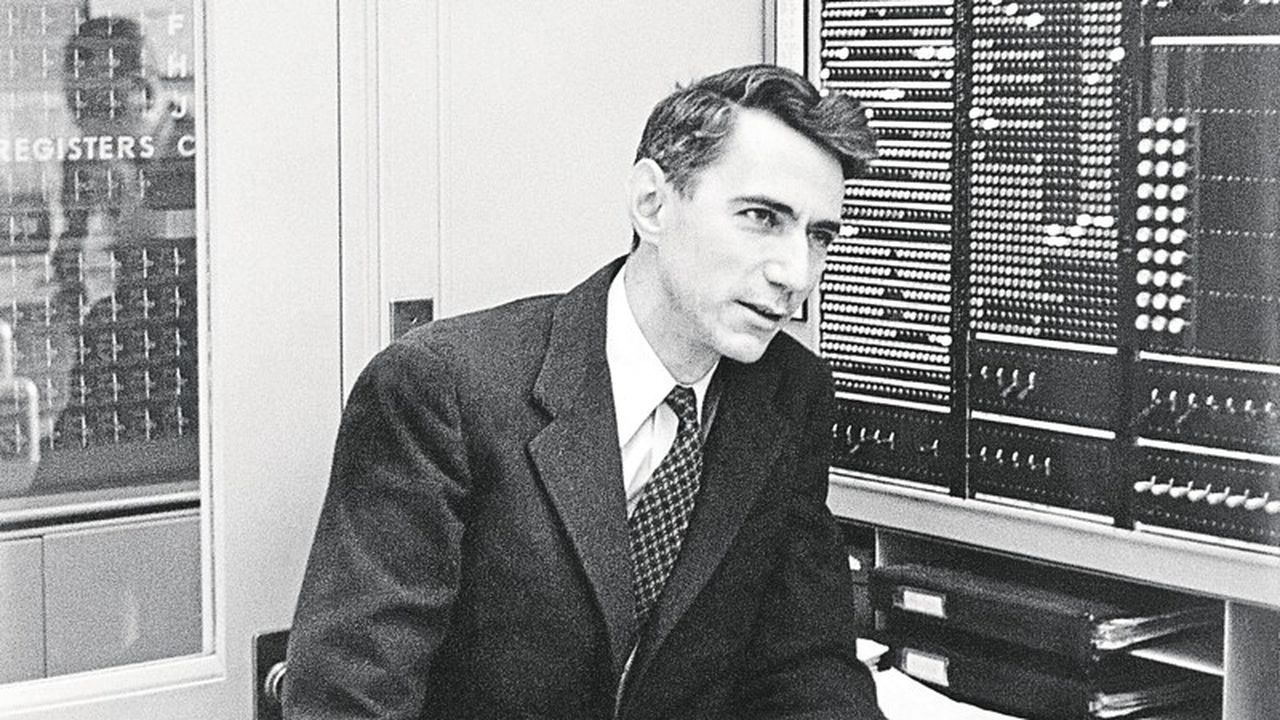
This week in The History of AI at AIWS.net – Claude Shannon was born on 30 April, 1916. He is recognized as the father of Information Technology. Shannon also participated and was a part of the inception of the Dartmouth Conference.
Claude Shannon was an American mathematician and electrical engineer. Shannon was born on 30 April, 1916 in Petoskey, Michigan, although he would spend most of his childhood at the nearby city Gaylord. He studied at the University of Michigan for his undergraduate degree and went to MIT for his Master’s and Ph.D. During the Second World War, Shannon joined Bell Labs and helped contributed in cryptography. It was during this time that he came into contact with Alan Turing. In 1948, he published the paper “A Mathematical Theory of Communication,” which is credited with founding the field of IT. He would work as faculty at MIT starting in 1956 until 1978. Although most of his contributions are in IT and other various electrical-related fields, he did propose a workshop on AI and join it (the Dartmouth Conference) in 1956. Shannon passed away on 24 February, 2001.
The Dartmouth Conference was a workshop held at Dartmouth College in 1956 to brainstorm ideas on “thinking machines”. There was a proposal drawn up the year before for such a workshop by Marvin Minsky, Nathaniel Rochester, and Claude Shannon. Amongst those that attended the workshop were the writers of the proposal, Allan Newell, Herbert Simon, and John McCarthy. This event is widely noted as the founding event of AI.
Claude Shannon was a pivotal figure in the development of IT and AI, in addition to his participation in the Dartmouth Conference, which is considered one of the founding events of the study of Artificial Intelligence. Thus, the HAI initiative recognizes his birth as an event in the history of AI.