
BGF and MDI wish you a Merry Christmas and Happy New Year


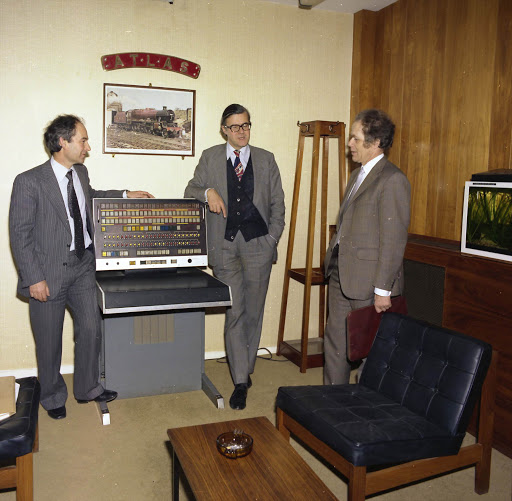
This week in The History of AI at AIWS.net – the Alvey Programme was launched by the British government in 1983. It is a project developed in response to Japan’s own Fifth Generation Computer project. There was no specific focus or directive, but rather the program was to support research in knowledge engineering in the UK.
Originally, the UK was invited to Japan’s FGP, and they created a committee chaired by John Alvey, a technology director at British Telecom. In the end, they rejected Japan’s invitation and formed the Alvey Programme. John Alvey was not involved in this initiative itself though.
This project was created in response to Japan’s Fifth Generation Computer program, funded by the Japanese Ministry of Trade and Industry in 1982. The goal of this program was to create computers with massively parallel computing and logic programming and to propel Japan to the top spots in advanced technology. This will then create a platform for future developments in AI. By the time of the program’s end, the opinion of it was mixed, divided between considering it a failure or ahead of its time.
Another program that rivalled the Alvey Programme was America’s Strategic Computing Initiative, founded in 1983 after the first AI winter in the 70s. The initiative supported projects that helped develop machine intelligence, from chip design to AI software. The DoD spent a total of 1 billion USD (not adjusted for inflation) before the program’s shutdown in 1993. Although the initiative failed to reach its overarching goals, specific targets were still met.
Although the results of the Alvey Programme and other computer and AI projects (Fifth Generation and SCI) in the 80s were mixed, they helped bring funding back to AI development after the first AI winter in the 70s. The History of AI marks the Alvey Programme as an important event in AI due to its marker in AI development in the 1980s.
This week in The History of AI at AIWS.net – the Strategic Computing Initiative was ended by DARPA in 1993. DARPA stands for the Defense Advanced Research Projects Agency, a research and development agency founded by the US Department of Defense in 1958 as the ARPA. Although its aim was for usage in the military, many of the innovations the agency funded were beyond the requirements for the US military. Some technologies that emerged from the backing of DARPA are computer networking and graphical user interfaces. DARPA works with academics and industry and report directly to senior DoD officials.
The Strategic Computing Initiative was founded in 1983, after the first AI winter in the 70s. The initiative supported projects that helped develop machine intelligence, from chip design to AI software. The DoD spent a total of 1 billion USD (not adjusted for inflation) before the program’s shutdown in 1993. Although the initiative failed to reach its overarching goals, specific targets were still met.
This project was created in response to Japan’s Fifth Generation Computer program, funded by the Japanese Ministry of Trade and Industry in 1982. The goal of this program was to create computers with massively parallel computing and logic programming and to propel Japan to the top spots in advanced technology. This will then create a platform for future developments in AI. By the time of the program’s end, the opinion of it was mixed, divided between considering it a failure or ahead of its time.
Although the results of the SCI and other computer and AI-related projects in the 80s were mixed, they helped bring funding back to AI development after the first AI winter in the 70s. The History of AI marks the Strategic Computer Initative as an important event in AI due to its revival of AI in the US, and its end signifies the second AI winter.
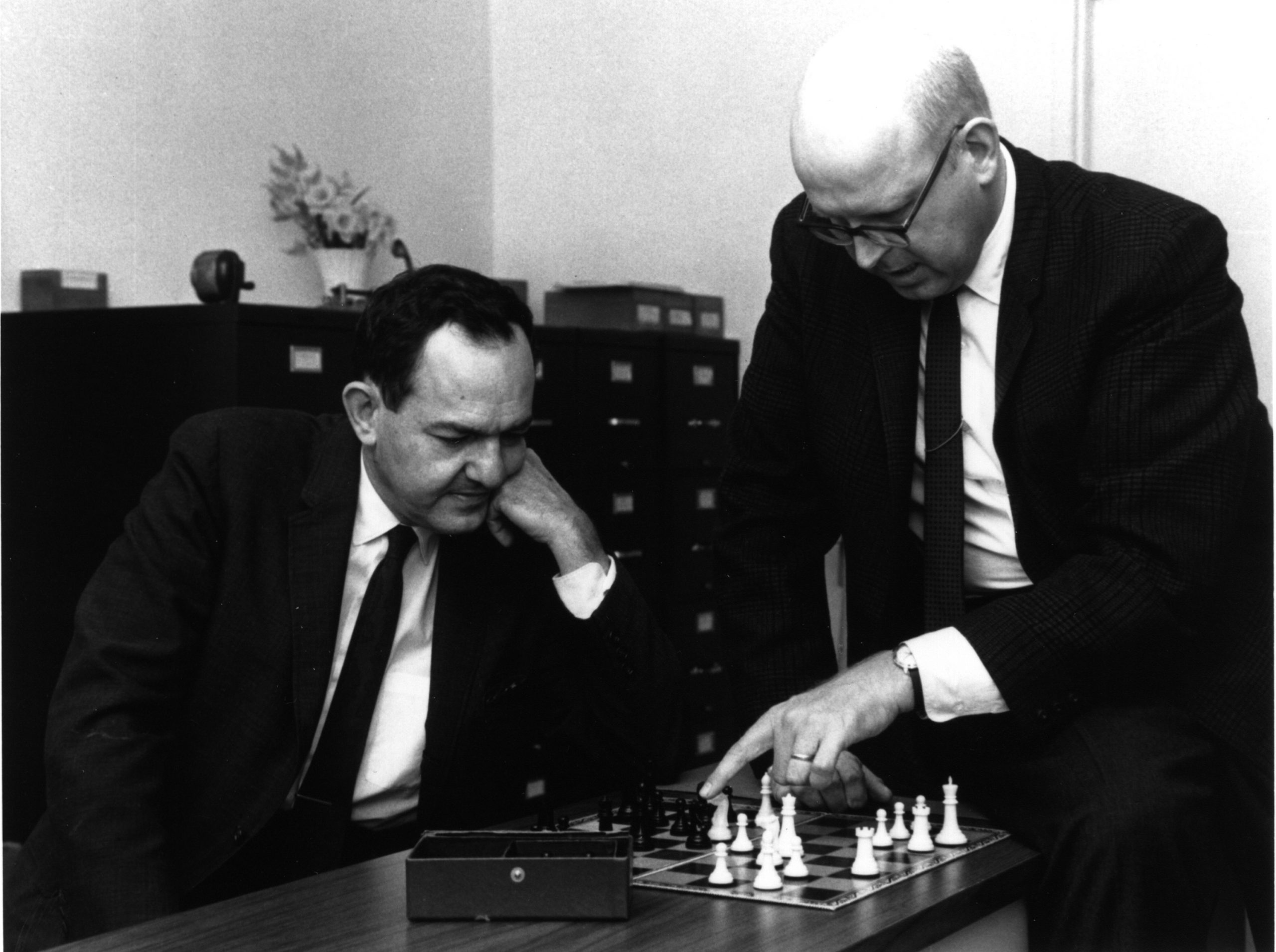
This week in The History of AI at AIWS.net – Herbert Simon and Allen Newell developed Logic Theorist in December 1955. Logic Theorist is a computer program that is considered to be the first AI program. The program was designed to perform automated reasoning, the first to be so intentionally. It was able to prove the first 38 theorems from the Principia Mathematica by Alfred North Whitehead and Bertrand Russell.
Herbert Simon was an American economist, political scientist, and cognitive scientist. In addition to Logic Theorist, he was known for research into decision-making in organisations and theories of bound rationality and satisficing. He worked at Carnegie Mellon University for the majority of his career. Simon received the Nobel Prize in Economics in 1978, and the Turing Award in 1975 for contributions to AI, human cognition, and list processing.
Allen Newell was an American researcher of computer science and cognitive psychology at the RAND Corporation and Carnegie Mellon University. He collaborated with Herbert Simon in developing Logic Theorist and General Problem Solver, some of the earliest examples of Artificial Intelligence. In 1975 He received the ACM Turing Award, the most prestigious award in computer science, jointly with Simon.
The HAI initiative considers the development of Logic Theorist as important in the History of Artificial Intelligence. It was a pioneering research that was pioneering in the study of AI. Logic Theorist would also influence concepts in AI research, such as heuristics and reasoning as search.

This week in The History of AI at AIWS.net – Yann LeCun, Yoshua Bengio, and others in November 1998 published a series of papers. They discussed neural networks and handwriting recognition, as well as backpropagation. One of them can be read here.
Yoshua Bengio is a Canadian computer scientist, most notable for his works on neural networks and deep learning. He is an influential scholar, being one of the most cited computer scientists. In the 1990s and 2000s, he helped make deep advancements in the field of deep learning. Bengio is also a Fellow of the Royal Society.
Yann LeCun is a French computer scientist, renowned for his work on deep learning and artificial intelligence. He is also notable for contributions to robotics and computational neuroscience. He is the Silver Professor of the Courant Institute of Mathematical Sciences at NYU. In addition, LeCun is the Chief AI Scientist for Facebook.
This is recognised by the HAI initiative for further pioneering works in artificial intelligence, notably in neural networks and backpropagation. Furthermore, both Bengio and LeCun were recipients of the 2018 ACM Turing Award for their contributions to deep learning, which is an aspect of artificial intelligence. Thus, the initiative considers this an important event in AI history.