by Admin | May 20, 2022 | Chronicles, News
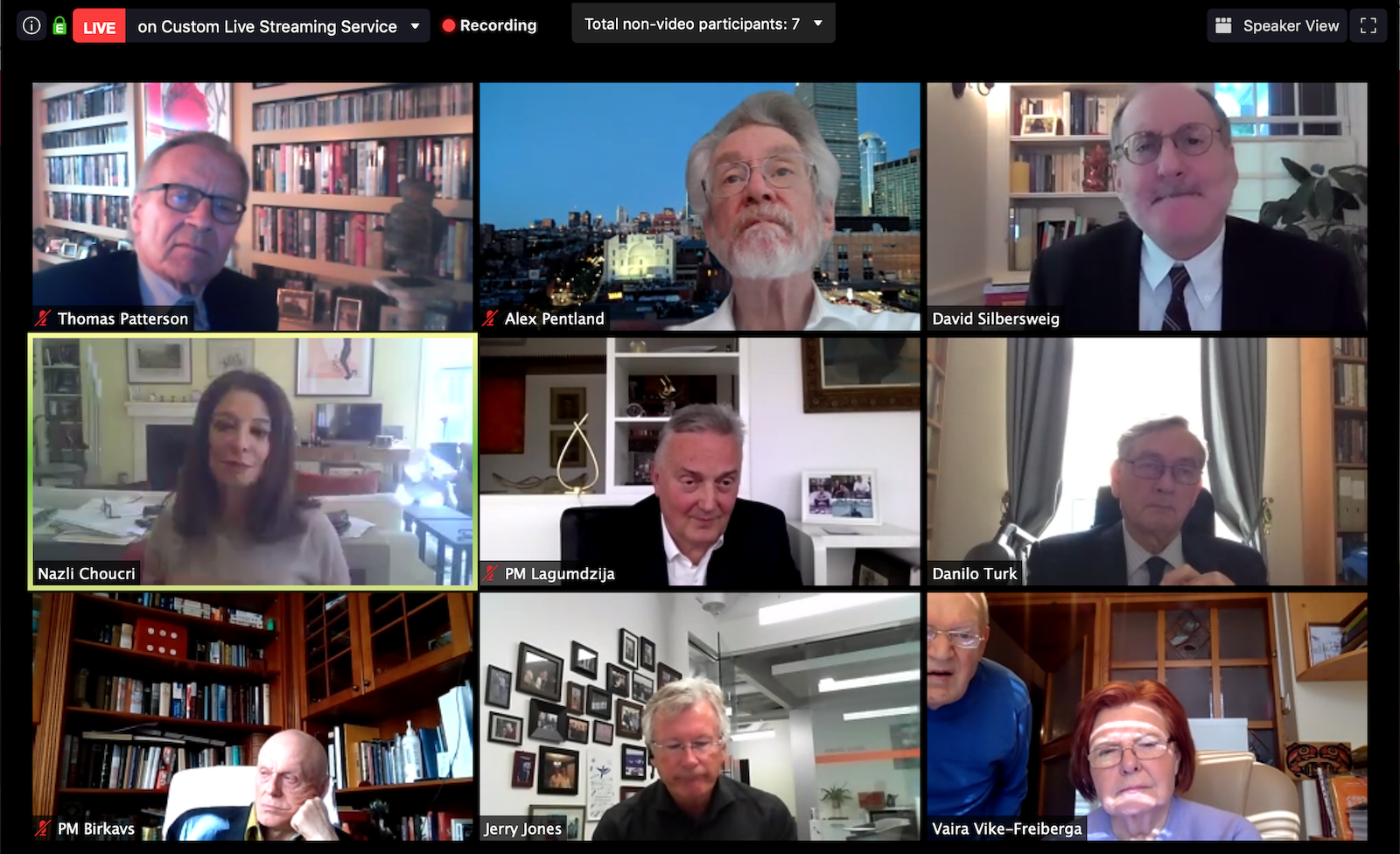
This week in The History of AI at AIWS.net – the World Leadership Alliance Club de Madrid organized the Online Roundtable “A New Social Contract in the Age of AI” on May 12, 2020.
The Roundtable was organized by the WLA-CdM in conjunction with Boston Global Forum. Panelists of the roundtable included professors and former head of states and governments. Members include the authors of the Social Contract 2020 – Thomas Patterson, Nazli Choucri, Alex Pentland, David Silbersweig, and Nguyen Anh Tuan. The full working title of this was “The Social Contract 2020, A New Social Contract in the Age of AI”.
This roundtable, although it happened in the recent past, was a contributing stone to the foundation and the road to the Social Contract 2020, which was released later that year. Thus, the HAI project considers this a milestone in the development of artificial intelligence, in broader society.
by Admin | May 13, 2022 | Chronicles, News
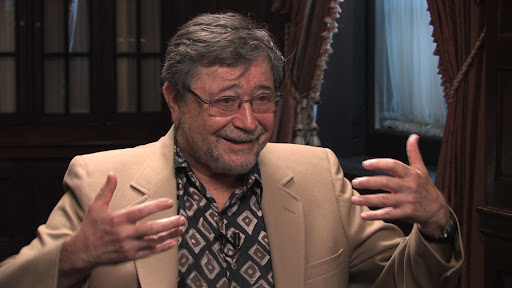
This week in The History of AI at AIWS.net – The Book of Why by Judea Pearl was published on 15 May, 2018. The book discusses causality and Bayesian probability, as well as their relations to fields such as AI and statistics.
Judea Pearl is a renowned Israeli-American computer scientist. He is a pioneer into Baynesian networks, probabilistic approaches to AI, and causal inference. He is also known for his other books, Probabilistic Reasoning in Intelligent Systems (1988) and Causality: Models, Reasoning, and Inference (2000). Professor Pearl won the Turing Award, one of the highest honours in the field of computer science, in 2011, for his works into AI through probabilistic and causal reasoning. He is a Chancellor’s Professor at UCLA.
The Book of Why (2018) can be bought through various booksellers such as Amazon and Barnes and Nobles, but further background information and supplementary materials can be read here.
Due to the impact that the book has, the History of AI initiative considers it an important marker in AI history. Professor Judea Pearl is one of the most influential computer scientists around the world. He is a Mentor of AI World Society Innovation Network (AIWS.net). Professor Pearl resides on the History of AI Board. He was honored as 2020 World Leader in AI World Society by Michael Dukakis Institute and the Boston Global Forum.

by Admin | May 6, 2022 | Chronicles, News
This week in The History of AI at AIWS.net – Unimate, an industrial robot developed in the 50s, becomes the first to work in New Jersey in 1961.
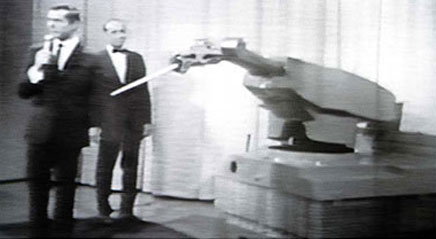
Unimate was invented by George Davol, who filed the patent in 1954. Davol met Joseph Engelberger in 1956, and the two paired up to found Unimation, the first robot manufacturing company. Davol and Engelberger promoted Unimate at The Tonight Show. Engelberger then exported industrial robotics to outside the US as well.
The Unimate worked at a General Motors assembly line at the Inland Fisher Guide Plant in New Jersey. The robot transported die castings from asssembly lines and welded parts on autos. It did this job because it was considered dangerous for human workers, due workplace hazards such as toxic fumes. The robot had the appearance of a box connected to an arm, with systematic tasks stored in a drum memory.
Although this machine was not directly connected to Artificial Intelligence, it was a precursor to developments in that field. By implementing a robot that can do tasks, this project was taking the first steps towards AI. Thus, the HAI initiatve considers this a milestone in the History of AI.

by Admin | Apr 29, 2022 | Chronicles, News
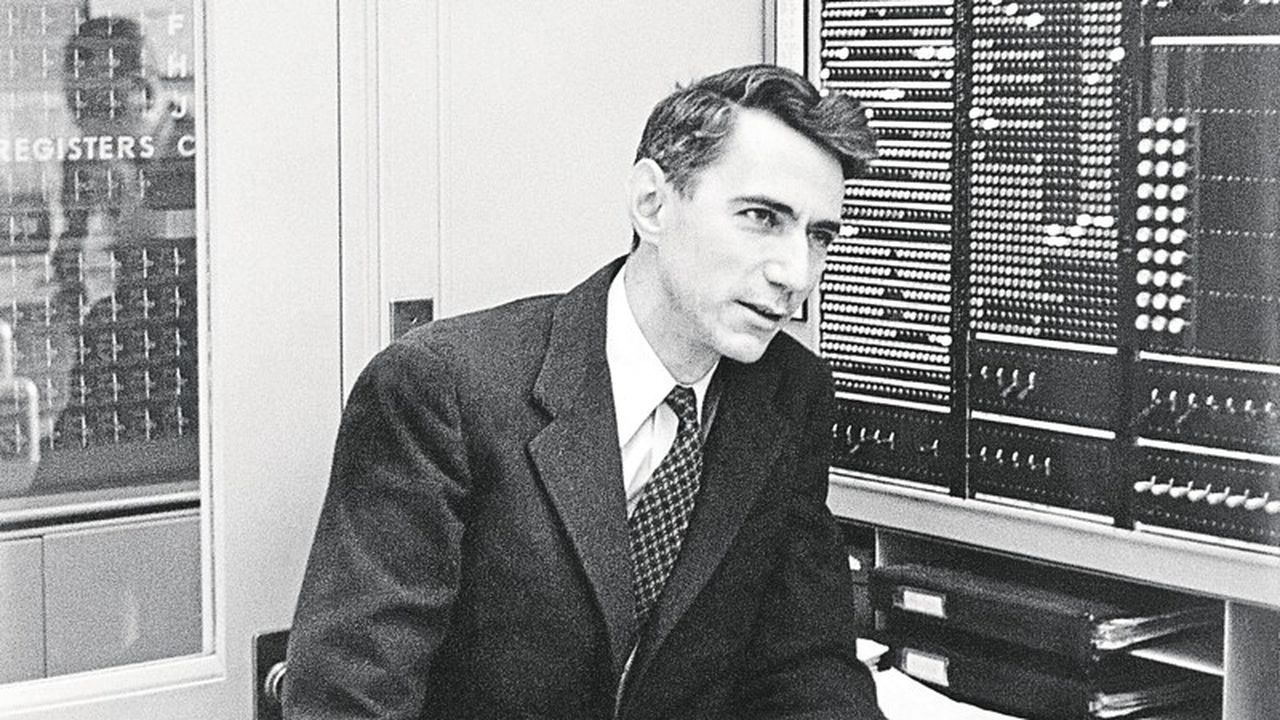
This week in The History of AI at AIWS.net – Claude Shannon was born on 30 April, 1916. He is recognized as the father of Information Technology. Shannon also participated and was a part of the inception of the Dartmouth Conference.
Claude Shannon was an American mathematician and electrical engineer. Shannon was born on 30 April, 1916 in Petoskey, Michigan, although he would spend most of his childhood at the nearby city Gaylord. He studied at the University of Michigan for his undergraduate degree and went to MIT for his Master’s and Ph.D. During the Second World War, Shannon joined Bell Labs and helped contributed in cryptography. It was during this time that he came into contact with Alan Turing. In 1948, he published the paper “A Mathematical Theory of Communication,” which is credited with founding the field of IT. He would work as faculty at MIT starting in 1956 until 1978. Although most of his contributions are in IT and other various electrical-related fields, he did propose a workshop on AI and join it (the Dartmouth Conference) in 1956. Shannon passed away on 24 February, 2001.
The Dartmouth Conference was a workshop held at Dartmouth College in 1956 to brainstorm ideas on “thinking machines”. There was a proposal drawn up the year before for such a workshop by Marvin Minsky, Nathaniel Rochester, and Claude Shannon. Amongst those that attended the workshop were the writers of the proposal, Allan Newell, Herbert Simon, and John McCarthy. This event is widely noted as the founding event of AI.
Claude Shannon was a pivotal figure in the development of IT and AI, in addition to his participation in the Dartmouth Conference, which is considered one of the founding events of the study of Artificial Intelligence. Thus, the HAI initiative recognizes his birth as an event in the history of AI.
by Admin | Apr 22, 2022 | Chronicles, News
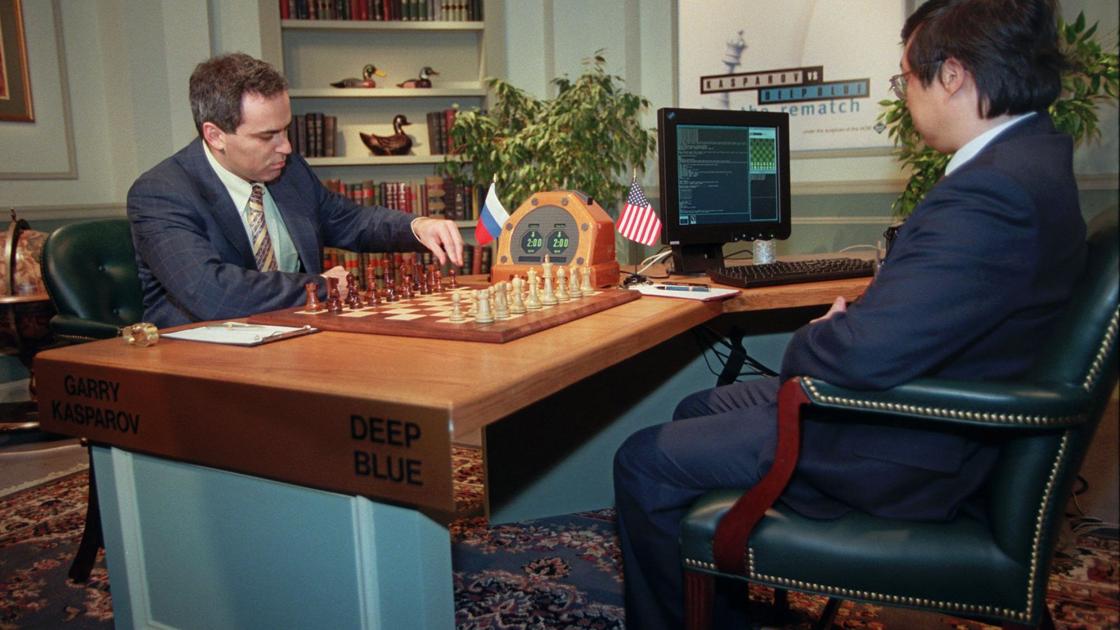
This week in The History of AI at AIWS.net – IBM “Deep Blue” machine defeats Garry Kasparov, the then-reigning World Chess Champion, at chess, in a highly-publicised match on 11 May, 1997. This date was the conclusion of 2 matches, one starting the year before, 1996.
The face-off began on February 10, 1996, in Philadelphia, Pennsylvania. Kasparov actually won this match 4-2. A year later in New York City, they would actually rematch, where Deep Blue defeated Kasparov 3.5-2.5. This rematch hosted a newer version of Deep Blue, dubbed “Deeper Blue”, that was upgraded after the first match. Deep Blue would also play against two other chess grandmasters. This battle was the subject of documentaries and talked about long after the match ended. It was speculated that the match was rigged in favour of IBM to boost their stocks.
IBM “Deep Blue” had its origins in a project by students at Carnegie Mellon University under the name ChipTest. It was later rebranded to Deep Thought. After these students graduated from Carnegie Mellon, they were asked by IBM to continue their research at the company. In 1989, it was renamed to Deep Blue after a competition. The machine was also helped in development by chess grandmaster Joel Benjamin. Deep Blue was released in 1996. After its rematch with Kasparov in 1997, it was dismantled. Its racks are held at the National Museum of American History and the Computer History Museum.
The HAI initiative considers this an event in the History of AI due to its impact on public perceptions of Artificial Intelligence. Similar to IBM’s public stunt with Jeopardy, this was also a display of the progress that AI has come from its heydays and origins in the 1960s.