by Admin | Apr 16, 2022 | Chronicles, News
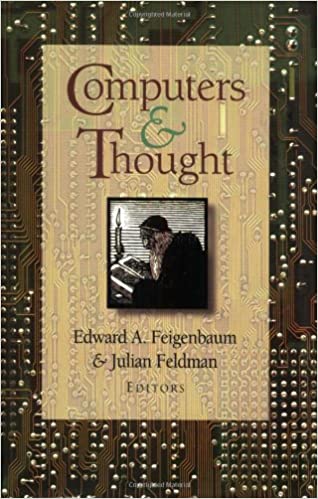
This week in The History of AI at AIWS.net – Edward Feigenbaum and Julian Feldman published Computers and Thought, a book composed of articles on Artificial Intelligence, the first of its kind, in 1963. Feigenbaum and Feldman edited and wrote some of the articles but they were not the the only contributors. Computers and Thought includes 20 articles from notable AI pioneers such as Alan Turing, Marvin Minsky, Allan Newell, Herbert Simon, and others.
Edward Feigenbaum is an American computer scientist focused on Artificial Intelligence. He studied at Carnegie Mellon University for both his B.S. and Ph.D., with Herbert Simon, an AI pioneer, as his doctoral advisor. He would go on to work at UC Berkeley and Stanford, the latter where he became Professor Emeritus of Computer Science (since 2000). Feigenbaum received the ACM Turing Award in 1994 with Raj Reddy for pioneering in AI and demonstrating its commercial potential.
Julian Feldman is an American computer scientist with an eye on Artificial Intelligence. Feldman studied at the University of Chicago for his undergrad; received an M.A. in political science; before going to Carnegie Mellon’s Graduate School of Industrial Administration for his Ph.D. He held a tenured position at UC Berkeley, before leaving it to help build UC Irvine, where he would create its Information and Computer Sciences department, the first ICS school in the UC system. Feldman also wrote papers and articles on connectionism, a fairly contentious topic within AI and computer science.
The HAI Initiative considers this book an important event in the history of AI due to its culmination of various thoughts on AI from its pioneers. Feigenbaum and Feldman themselves are also notable figures in the development of artificial intelligence.

by Admin | Apr 13, 2022 | Cornerstones, News
Edward Feigenbaum is the Kumagai Professor of Computer Science and Co-Scientific Director, Knowledge Systems Laboratory at Stanford University. He made several contributions to the development of AI, becoming a co-recipient of the Turing Award in 1994. He is considered “the father of expert systems”. Joining Stanford University in 1965, he became one of the founders of its Computer Science Departments. His bibliography includes Computers and Thought and The Handbook of Artificial Intelligence.
Professor Feigenbaum was elected to the National Academy of Engineering in 1986. In the same year, he was elected to the Productivity Hall of Fame of the Republic of Singapore. He is an elected Fellow of the American Association for Artificial Intelligence, the honorary American College of Medical Informatics. He was elected to the American Academy of Arts and Sciences in 1991. He is the first recipient of the Feigenbaum Medal, an award established in his honor by the World Congress of Expert Systems. He was elected Fellow to the American Institute of Medical and Biological Engineering in January 1994. He received the U.S. Air Force Exceptional Civilian Service Award in 1997.
The History of AI Board warmly welcomes Professor Edward Feigenbaum.
by Admin | Apr 8, 2022 | Chronicles, News
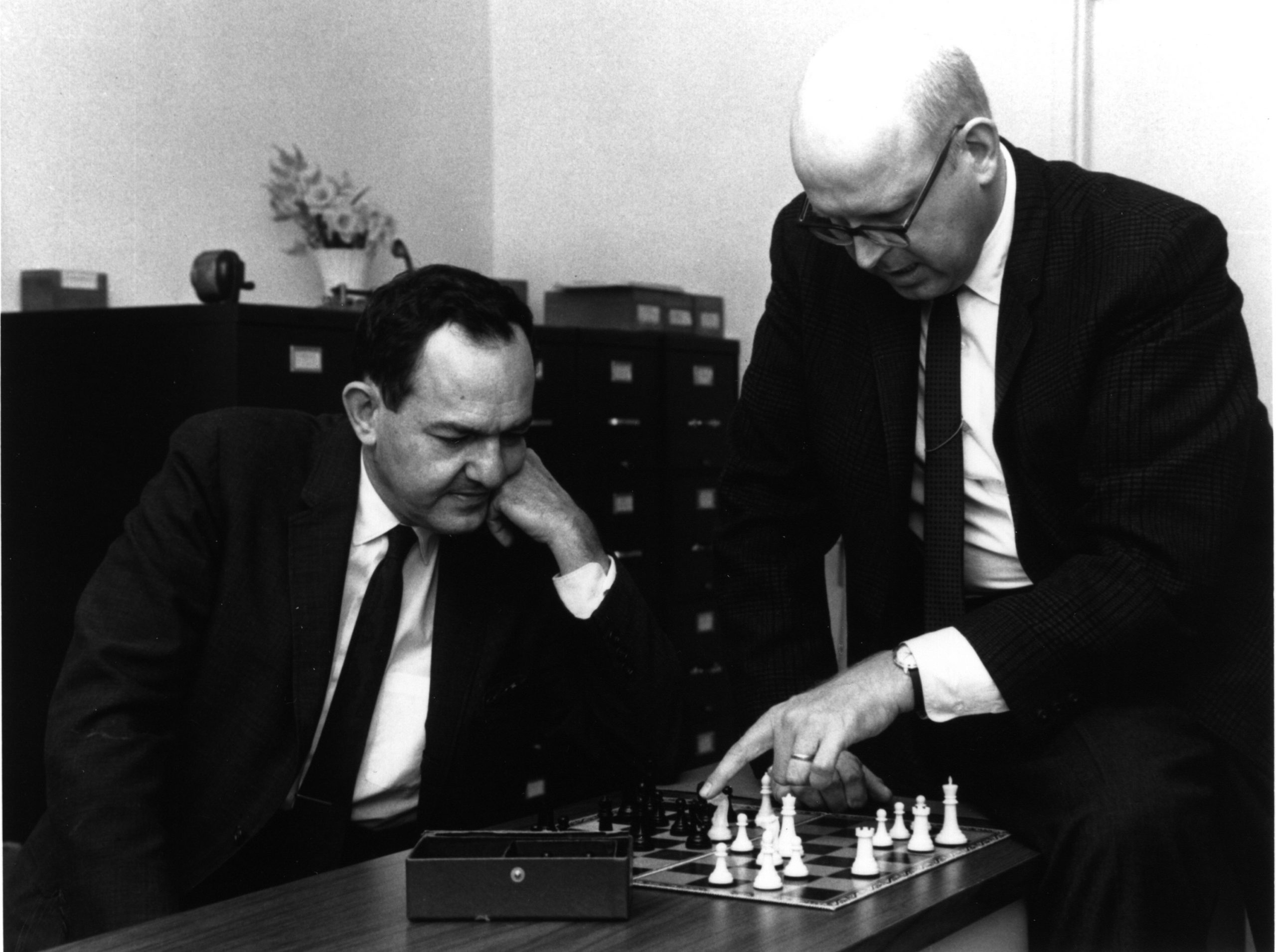
This week in The History of AI at AIWS.net – Herbert Simon and Allen Newell developed Logic Theorist in December 1955. Logic Theorist is a computer program that is considered to be the first AI program. The program was designed to perform automated reasoning, the first to be so intentionally. It was able to prove the first 38 theorems from the Principia Mathematica by Alfred North Whitehead and Bertrand Russell.
Herbert Simon was an American economist, political scientist, and cognitive scientist. In addition to Logic Theorist, he was known for research into decision-making in organisations and theories of bound rationality and satisficing. He worked at Carnegie Mellon University for the majority of his career. Simon received the Nobel Prize in Economics in 1978, and the Turing Award in 1975 for contributions to AI, human cognition, and list processing.
Allen Newell was an American researcher of computer science and cognitive psychology at the RAND Corporation and Carnegie Mellon University. He collaborated with Herbert Simon in developing Logic Theorist and General Problem Solver, some of the earliest examples of Artificial Intelligence. In 1975 He received the ACM Turing Award, the most prestigious award in computer science, jointly with Simon.
The HAI initiative considers the development of Logic Theorist as important in the History of Artificial Intelligence. It was a pioneering research that was pioneering in the study of AI. Logic Theorist would also influence concepts in AI research, such as heuristics and reasoning as search.
by Admin | Apr 1, 2022 | Chronicles, News
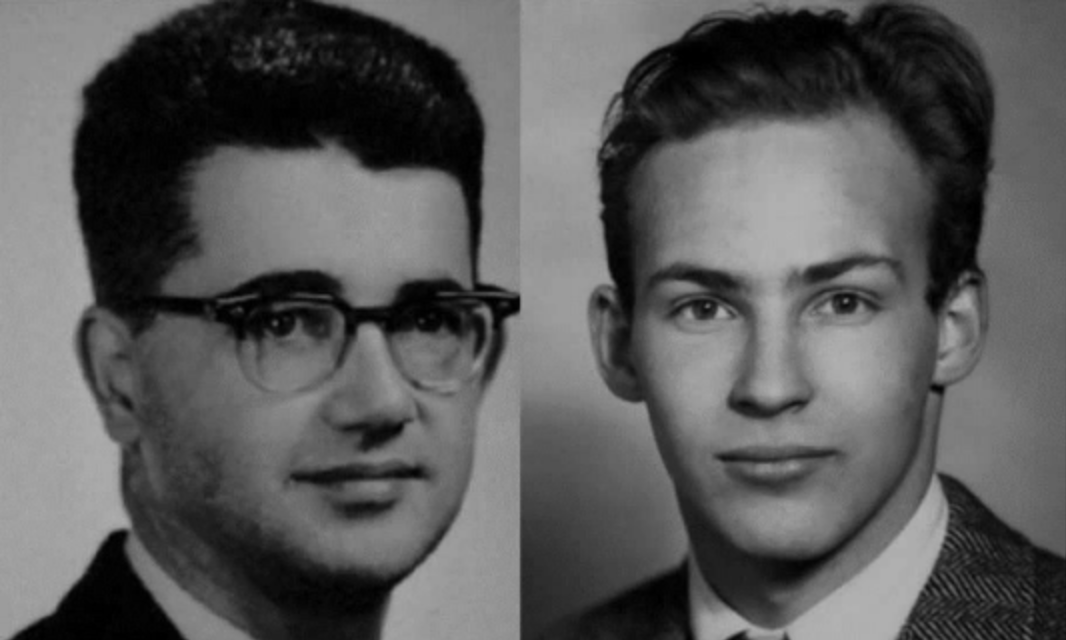
This week in The History of AI at AIWS.net – the MIT AI Lab was founded by John McCarthy and Marvin Minsky in 1959. This marked the beginning of coordinated AI research at MIT. The lab focused on researching and developing AI. The Lab went through several iterations and in 2003 merged with the Laboratory for Computer Science to become the MIT Computer Science and Artificial Intelligence Laboratory.
Marvin Minsky was an American cognitive and computer scientist. He penned the research proposal for the Dartmouth Conference, which coined the term “Artificial Intelligence”, and he was a participant in it when it was hosted in 1956. Minsky would make various contributions to the development of Artificial Intelligence. In terms of popular culture, he was an advisor to Stanley Kubrick’s acclaimed movie 2001: A Space Odyssey. He won the Turing Award in 1969.
John McCarthy was an American computer scientist. He, along with Minsky and others, co-wrote the proposal for the Dartmouth Conference, and participated in it. McCarthy also developed the Lisp programming language. Additionally, he also influenced various tasks in computer science. He spent most of his career at Stanford after working at Dartmouth and MIT. McCarthy won the Turing Award in 1971.
The History of AI Initiative considers the founding of the MIT AI Lab as an important event due to its role in the contribution to AI development. Furthermore, Marvin Minsky and John McCarthy are considered some of the founders of Artificial Intelligence research.
by Admin | Mar 25, 2022 | Chronicles, News
This week in The History of AI at AIWS.net – H. A. Simon was quoted with a prediction, “machines will be capable, within twenty years, of doing any work a man can do” in the 1960s. He wrote this in his “The New Science of Management Decision”
Herbert Simon was an American economist, political scientist, and cognitive scientist. In addition to Logic Theorist, he was known for research into decision-making in organisations and theories of bound rationality and satisficing. He worked at Carnegie Mellon University for the majority of his career. Simon received the Nobel Prize in Economics in 1978, and the Turing Award in 1975 for contributions to AI, human cognition, and list processing.
His prediction was stated in his work in the 60s, after the bloom of AI development in the advent of the Dartmouth Conference. Optimism was running high, and advocates and academics for AI envisioned a romantic vision of what it could be. However, his prediction did not come to fruition, as AI development suffered stagnations and the like.
This quote was an event in the history of AI due to its display of the sentiments of optimism of the time. Herbert Simon is also a notable found father of AI. His quotation is still deliberated about to this day.