by Admin | Jan 29, 2021 | Chronicles, News
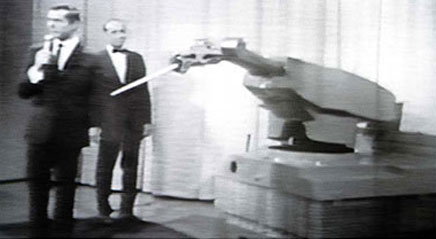
This week in The History of AI at AIWS.net – Unimate, an industrial robot developed in the 50s, becomes the first to work in New Jersey in 1961.
Unimate was invented by George Davol, who filed the patent in 1954. Davol met Joseph Engelberger in 1956, and the two paired up to found Unimation, the first robot manufacturing company. Davol and Engelberger promoted Unimate at The Tonight Show. Engelberger then exported industrial robotics to outside the US as well.
The Unimate worked at a General Motors assembly line at the Inland Fisher Guide Plant in New Jersey. The robot transported die castings from asssembly lines and welded parts on autos. It did this job because it was considered dangerous for human workers, due workplace hazards such as toxic fumes. The robot had the appearance of a box connected to an arm, with systematic tasks stored in a drum memory.
Although this machine was not directly connected to Artificial Intelligence, it was a precursor to developments in that field. By implementing a robot that can do tasks, this project was taking the first steps towards AI. Thus, the HAI initiatve considers this a milestone in the History of AI
by Admin | Jan 24, 2021 | News
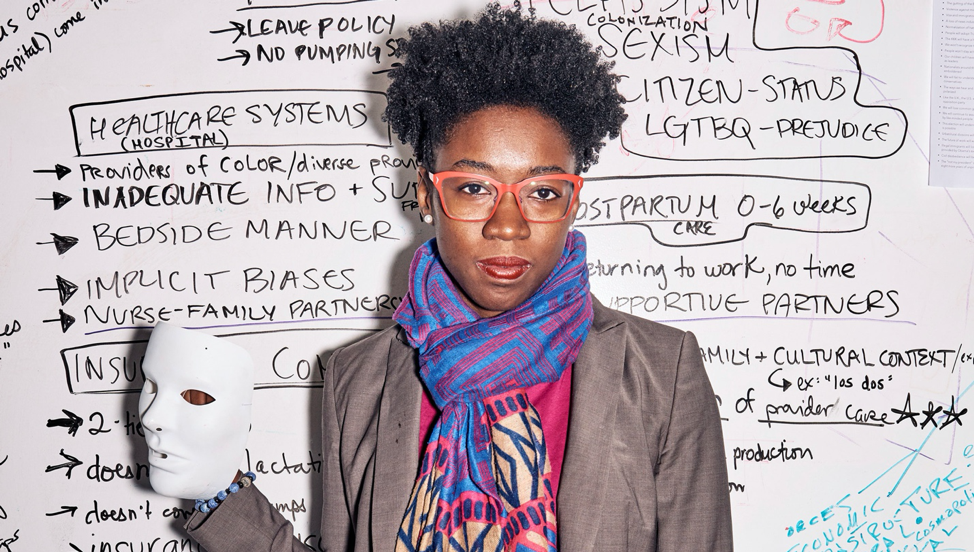
Joy Adowaa Buolamwini is a Ghanaian-American computer scientist and digital activist based at the MIT Media Lab. She founded the Algorithmic Justice League, an organisation that looks to challenge bias in decision making software.
In 2020, Buolamwini was on the front lines of campaigns in the United States and around the world to stop bias in AI systems. Her research helped persuade Amazon, IBM, and Microsoft to put a hold on facial recognition technology. Her 2020 TED Talk on algorithmic bias has over 1 million views. She was featured in the documentary film Coded Bias that premiered at
the 2020 Sundance Film Festival, that explores how algorithms encode and propagate bias.
Joy Buolamwini has testified before Congress about the dangers of facial recognition and she has called for a complete ban of police use of face surveillance. Her MIT thesis uncovered large racial and gender bias in AI services. Her research has been covered in over 40 countries, and as a renowned international speaker she has championed the need for algorithmic justice at the World Economic Forum and the United Nations. She serves on the Global Tech Panel convened by the vice president of European Commission to advise world leaders and technology executives on ways to reduce the harms of A.I.
As a creative science communicator, she has written op-eds on the impact of artificial intelligence for publications such as TIME Magazine and New York Times. Her spoken word visual audit “AI, Ain’t I A Woman?” shows AI failures on the faces of iconic women like Oprah Winfrey, Michelle Obama, and Serena Williams as well as the Coded Gaze short have been part of exhibitions ranging from the Museum of Fine Arts, Boston to the Barbican Centre, UK.
A Rhodes Scholar and Fulbright Fellow, she holds two master degrees from Oxford University and MIT; and a bachelor’s degree in Computer Science from the Georgia Institute of Technology. Fortune Magazine named her to their 2019 list of world’s greatest leaders describing her as “the conscience of the A.I. Revolution.”
A brilliant researcher, a highly effective advocate, a creative communicator, Joy Boulamwini should be recognized for HAI 2020.
by Admin | Jan 22, 2021 | Chronicles, News
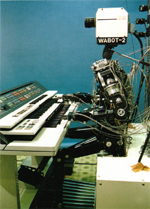
This week in The History of AI at AIWS.net – Waseda University built WABOT-2 in 1984. A follow up to the WABOT-1 they built in 1973, this robot was also anthropomorphic, but improvements were made.
The WABOT-2 was a follow-up to the WABOT-1 project. This iteration can now play music of average difficulty on an electronic organ. It was now able to converse with another person as well. In addition, it now has a camera for its head. A contrast with WABOT-1 is that WABOT-2 is considered a “specialist robot” instead of a “versatile robot”.
After the success of WABOT-1 in 1973, Waseda University picked the project back up in 1980. The project developed by a study group at the School of Science & Engineering. The goal of this project was to create an anthropomorphic robot that could perform intelligent tasks such as performing music. Thus, WABOT-2 became more specialised, rather than the versatility of WABOT-1
Similar to the WABOT-1, WABOT-2 was mainly a robotic project. Still, the WABOT-2 helped develop AI in improving the WABOT’s ability to conversate. The HAI initiative considers this an event, as with the first one, in the History of AI due to its contributions to the development of AI.
by Admin | Jan 15, 2021 | Chronicles, News
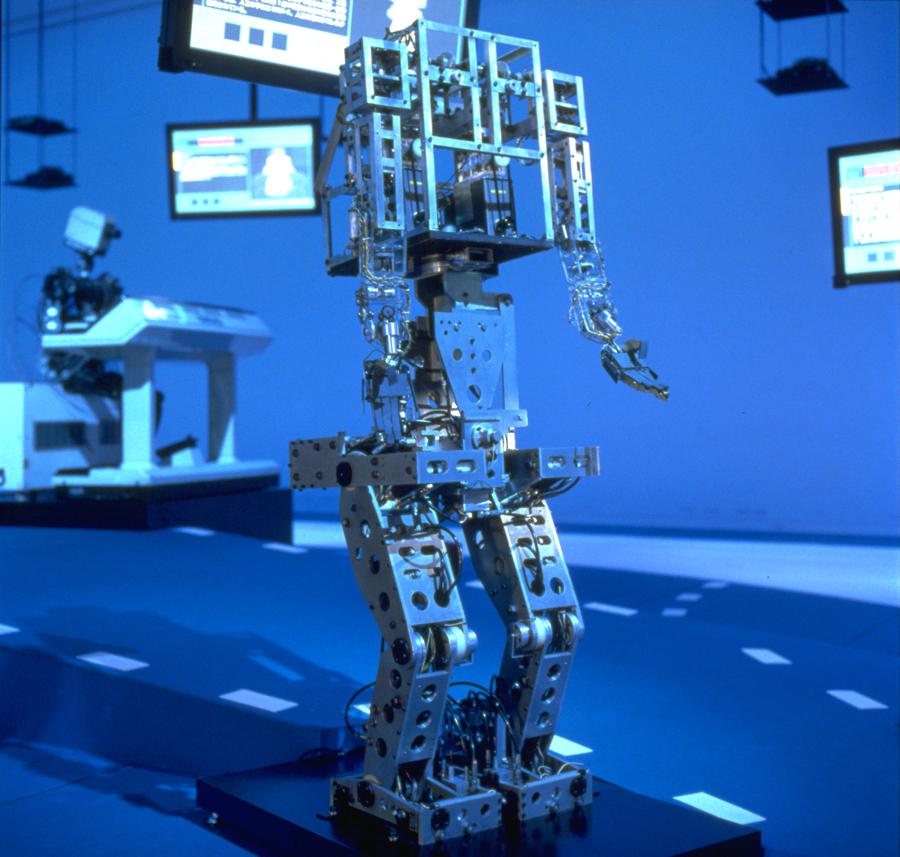
This week in The History of AI at AIWS.net – Waseda University built WABOT-1 in 1973. It was the first full-scale anthropomorphic robot, with a climb-control system, a vision system, and a conversation system.
The WABOT-1 was the first of its kind. It was able to communicate with a person in Japanese, as well as measure distance and direction. WABOT (WAseda roBOT) was able to walk and grab objects. It had the mental faculty of a one-and-a-half-year-old child. The robot had the WAM-4 for its hands, and the WL-5 for its legs.
The WABOT project was initiatived at Waseda University in Tokyo, Japan in 1967. Development did not fully start until 1970, and was not finished until 1973. The project was under the direction of Ichiro Kato at the School of Science & Engineering. In the 80s, Waseda University would reiterate its works on WABOT-1 with a new robot, the WABOT-2.
While the WABOT-1 was a mainly robotic project, its conversation system creates for it an important connection to the field of AI. The HAI initiative considers this an event in the History of AI due to its contributions to the development of AI.
by Admin | Jan 8, 2021 | Chronicles, News
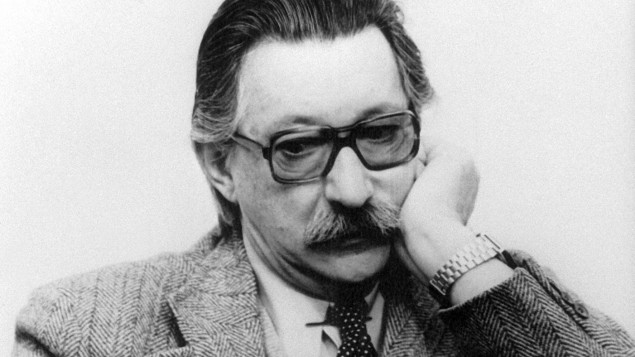
This week in The History of AI at AIWS.net – Joseph Weizenbaum was born on January 8th, 1923. Weizenbaum published the program ELIZA in 1966 which could mimic conversation with humans. Although Weizenbaum was considered a father of Artificial Intelligence, he criticised the field later in his life.
Joseph Weizenbaum was a German-American computer scientist. He was born in 1923 to Jewish parents in Germany and fled to the US in 1936. He studied at Wayne State University, which was interrupted by the outbreak of the Second World War, but he completed his B.S. there in 1946 and M.S. in 1950. He started working at MIT in 1964. There he developed ELIZA. In the 70s and 80s he casted some doubts on AI and computer, with his book Computer Power and Human Reason (1976) and an interview with MIT’s The Tech. In 2008, the International Society for Ethics and Information Technology established the Weizenbaum Award, named after him, for individuals that made significant contributions to information and computer ethics. Weizenbaum passed away in Germany in 2008.
ELIZA was a computer program developed at the MIT AI Lab between 1964 and 1966. It was named after the character Eliza Doolittle from the play Pygmalion by George Bernard Shaw. The program runs a DOCTOR script, and acts in the manner of a psychotherapist. ELIZA could simulate a conversation but wasn’t able to contextualised them. Weizenbaum’s purpose of developing the program was to demonstrate the superficiality of communication between humans and machines. ELIZA is one of the first examples of a chatbot.
Joseph Weizenbaum was a pivotal figure in the development of AI with his contribution of ELZIA. Thus, the HAI Initiative considers his birth to be a notable event in the history of AI.

by Admin | Jan 1, 2021 | Chronicles, News
Yesterday, the HAI board and initiative announced the HAI 2020 awards and nominations which can be read here in full.
This week in The History of AI at AIWS.net – the end of the first AI Winter in 1980. This was due to the adoption of “expert systems” into corporations in the 90s and Japan’s Fifth Generation Computer project.
Expert systems are computer systems that can emulate man’s decision-making abilities. They are designed to solve problems through reasoning and they can perform at the level of human experts. The first expert system was SAINT, developed by Marvin Minsky and James Robert Slagle. Lisp machines are designed to be able to run expert systems. Lisp machine runs the Lisp programming language, and in a way, it was one of the first commercial and personal workstation computer.
Japan’s Fifth Generation Computer program was created and funded by the Japanese Ministry of Trade and Industry in 1982. The goal of this program was to create computers with massively parallel computing and logic programming and to propel Japan to the top spots in advanced technology. This will then create a platform for future developments in AI. By the time of the program’s end, the opinion of it was mixed, divided between considering it a failure or ahead of its time.
The HAI initiative considers the end of the frst AI Winter as a significant marker in AI history. It ended the thaw in AI development and revitalised the field, leading to more pioneering and research. As we enter a new year, we would like to wish our readers a Happy New Year, and hope for the development of Artificial Intelligence to greater heights, as is what happened after an AI winter.