by Admin | Dec 31, 2020 | News
RELEASE: December 31, 2020
1200 EST / 1800 CET
AI World Society Announces
History of AI 2020 Awards
BOSTON – The AI World Society today announced the History of AI 2020 Awards. The HAI Awards recognize people and achievements in the AI world that are pioneering, meaningful, and influential.
The History of AI 2020 Awards for Achievement go to:
AlphaFold – the solution to a 50-year-old grand challenge in biology, developed by DeepMind. “This breakthrough demonstrates the impact AI can have on scientific discovery and its potential to dramatically accelerate progress in some of the most fundamental fields that explain and shape our world.”
“Artificial Intelligence and Democratic Values” – the first comparative study of AI policies and practices sets out a methodology to promote AI that is trustworthy and human-centric. Professor Mireille Hildebrandt called the report “a trove of materials to enable mutual learning strategies.” Gabriela Zanfir-Fortuna said the report is a “vital resource for global policymakers . . . comprehensive and incredibly valuable.”
Deep Understanding – a concept pioneered by Professor Judea Pearl for the development of AI systems that could minimize the creation of large data sets. Deep understanding challenges the common view that meaningful AI requires intensive data collection.
GPT-3 – a natural language program that produces news articles and technical manuals, creative essays, and computer code often difficult to distinguish from human output. GPT-3 also raises challenging ethical questions about machine-generated text.
Social Contract for the AI Age – a framework for a new social contract to ensure peace, security, and democracy in the modern era. The World Leadership Alliance-Club de Madrid, the largest association of former Presidents and Prime Ministers of democratic governments, have endorsed the Social Contract.
The History of AI 2020 Awards to Individuals go to:
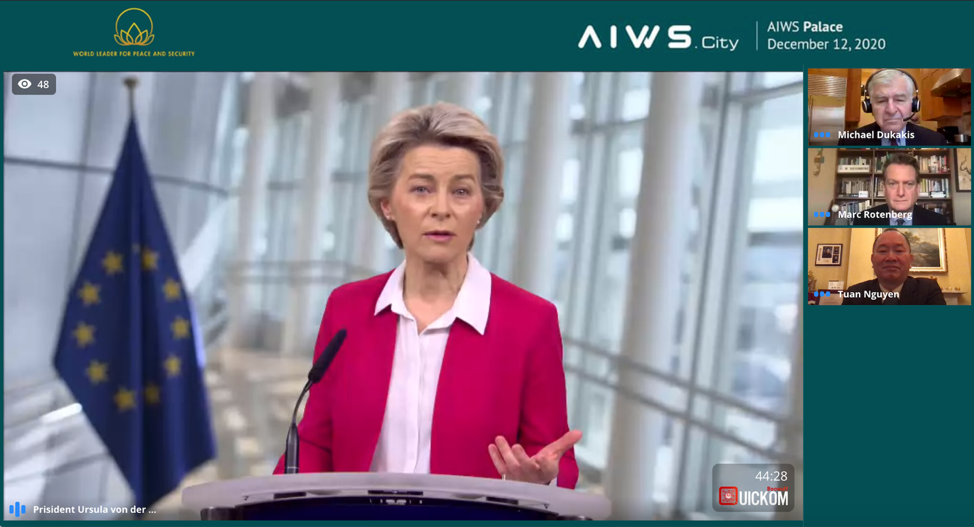
President Ursula von der Leyen – The incoming President of the European Commission, von der Leyen has led efforts to establish a regulatory framework for AI, opposed black box algorithms, and called for a Transatlantic Agreement on Artificial Intelligence, based on democratic values, including “human rights, pluralism, inclusion, and the protection of privacy.”
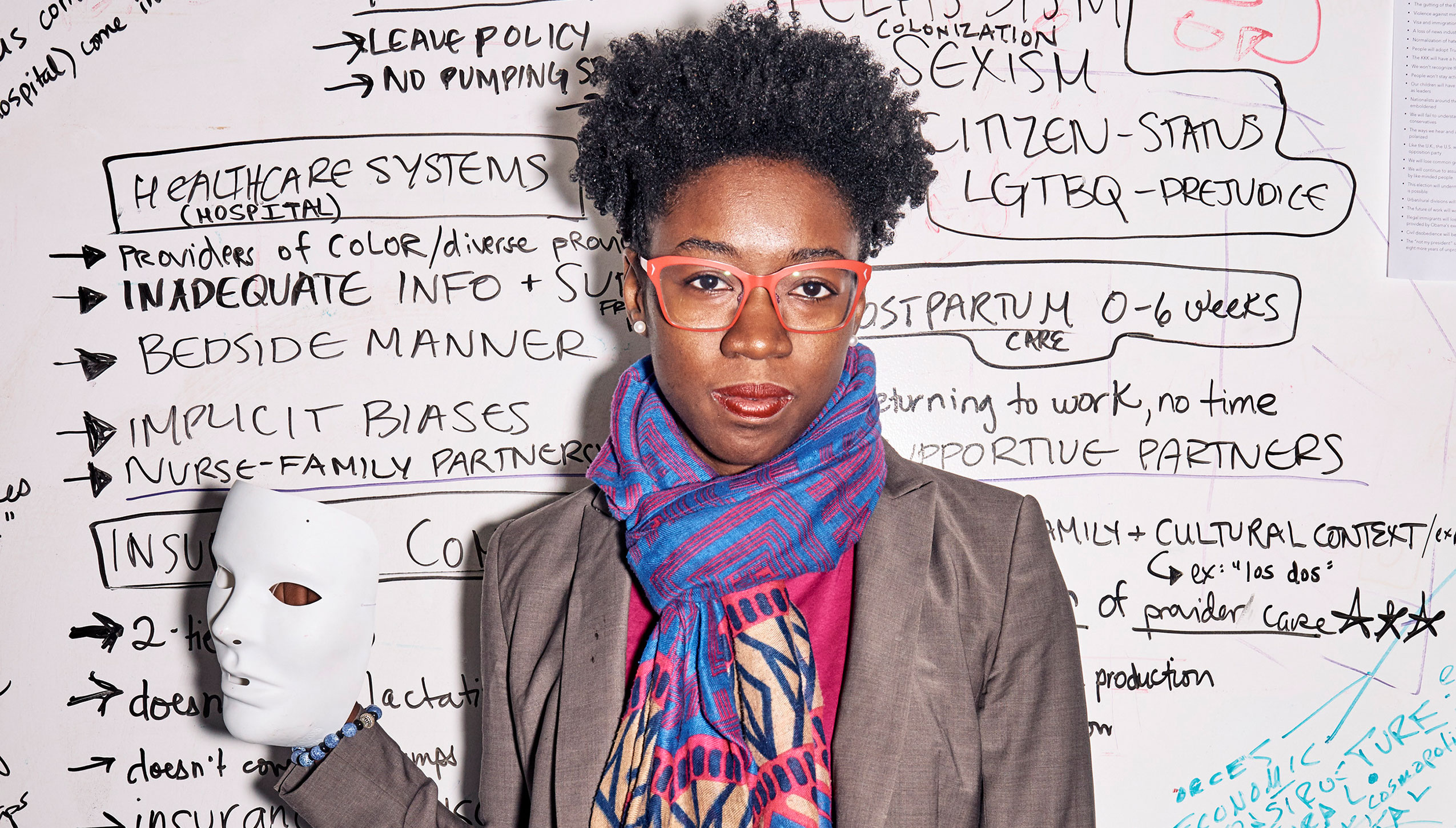
Joy Boulawamini – a Ghanaian-American computer scientist and digital activist based at the MIT Media Lab, Buolawamini founded the Algorithmic Justice League to challenge bias in AI systems. In 2020, her research helped persuade Amazon, IBM, and Microsoft to suspend facial recognition technology, one the most controversial applications of AI.
The History of AI 2020 Awards will be featured at the AI World Society City. The AI World Society (AIWS) City, established in collaboration with the World Leadership Alliance – Club de Madrid, and the United Nations Academic Impact, is a virtual digital city dedicated to the principle of the Social Contract for the AI Age.
CONTACT
Nguyen Anh Tuan, Co-Founder, AI World Society: [email protected]
Press Secretary Dick Pirozzolo: [email protected] / +1 617 959 4613
by Admin | Dec 30, 2020 | News
NOMINATION
History of AI 2020
Joy Buolamwini
Joy Adowaa Buolamwini is a Ghanaian-American computer scientist and digital activist based at the MIT Media Lab. She founded the Algorithmic Justice League, an organisation that looks to challenge bias in decision making software.
In 2020, Buolamwini was on the front lines of campaigns in the United States and around the world to stop bias in AI systems. Her research helped persuade Amazon, IBM, and Microsoft to put a hold on facial recognition technology. Her 2020 TED Talk on algorithmic bias has over 1 million views. She was featured in the documentary film Coded Bias that premiered at
the 2020 Sundance Film Festival, that explores how algorithms encode and propagate bias.
Joy Buolamwini has testified before Congress about the dangers of facial recognition and she has called for a complete ban of police use of face surveillance. Her MIT thesis uncovered large racial and gender bias in AI services. Her research has been covered in over 40 countries, and as a renowned international speaker she has championed the need for algorithmic justice at the World Economic Forum and the United Nations. She serves on the Global Tech Panel convened by the vice president of European Commission to advise world leaders and technology executives on ways to reduce the harms of A.I.
As a creative science communicator, she has written op-eds on the impact of artificial intelligence for publications such as TIME Magazine and New York Times. Her spoken word visual audit “AI, Ain’t I A Woman?” shows AI failures on the faces of iconic women like Oprah Winfrey, Michelle Obama, and Serena Williams as well as the Coded Gaze short have been part of exhibitions ranging from the Museum of Fine Arts, Boston to the Barbican Centre, UK.
A Rhodes Scholar and Fulbright Fellow, she holds two masters degrees from Oxford University and MIT; and a bachelor’s degree in Computer Science from the Georgia Institute of Technology. Fortune Magazine named her to their 2019 list of world’s greatest leaders describing her as “the conscience of the A.I. Revolution.”
A brilliant researcher, a highly effective advocate, a creative communicator, Joy Boulamwini should be recognized for HAI 2020.
Marc Rotenberg
by Admin | Dec 30, 2020 | News
NOMINATION
History of AI 2020
President Ursula von der Leyen
Trained as a physician, Ursula von der Leyen entered politics as a cabinet minister in the German state of Lower Saxony. When Angela Merkel became German chancellor in 2005, she appointed Dr. von der Leyen as Minister of Family Affairs and Youth, a portfolio that aligned with her work on women’s health.
After four years in that position, she was appointed Minister of Labor and Social Affairs. She was then appointed Minister of Defense, the first woman to hold that top post. Von der Leyen also had the distinction of being the longest serving minister of the Merkel government.
As incoming President of the European Commission, in December 2019 von der Leyen called for new rules for AI that respect human rights and public safety. At the 2019 G-20 Summit in Japan, Chancellor Angela Merkel earlier proposed “It will be the job of the next Commission to deliver something so that we have regulation similar to the General Data Protection Regulation that makes it clear that artificial intelligence serves humanity.”
In February 2020, President von der Leyen set out a White Paper on AI for public consultation. In the September 2020 State of the Union Address, she prioritized AI policy for the European Union. She said, “Whether it’s precision farming in agriculture, more accurate medical diagnosis or safe autonomous driving – artificial intelligence will open up new worlds for us.” Von der Leyen continued, “But this world also needs rules. We want a set of rules that puts people at the centre. Algorithms must not be a black box and there must be clear rules if something goes wrong. The Commission will propose a law to this effect next year. This includes control over our personal data which still have far too rarely today.”
And speaking to the Boston Global Forum on December 12, 2020, President von der Leyen called for a Transatlantic Agreement on AI, based on democratic values, including “human rights, pluralism, inclusion, and the protection of privacy.” For her pioneering leadership, she received the 2020 World Leader for Peace and Security Award.
President von der Leyen is also a tireless advocate for a more united Europe, a Europe that would assume a larger role in international diplomacy and security. A champion of democratic rights and institutions, she has contested the emergence of right-wing nationalism and state authoritarianism. She has pressed European countries to act collectively against COVID-19. She is committed to the Transatlantic Alliance, recognizing the collective responsibility of the EU and the US to advance global peace, security, and development.
A champion of democratic values, a trained scientist who places humanity at the center of AI innovation, President von der Leyen should be recognized for HAI 2020
Marc Rotenberg
by Admin | Dec 30, 2020 | News
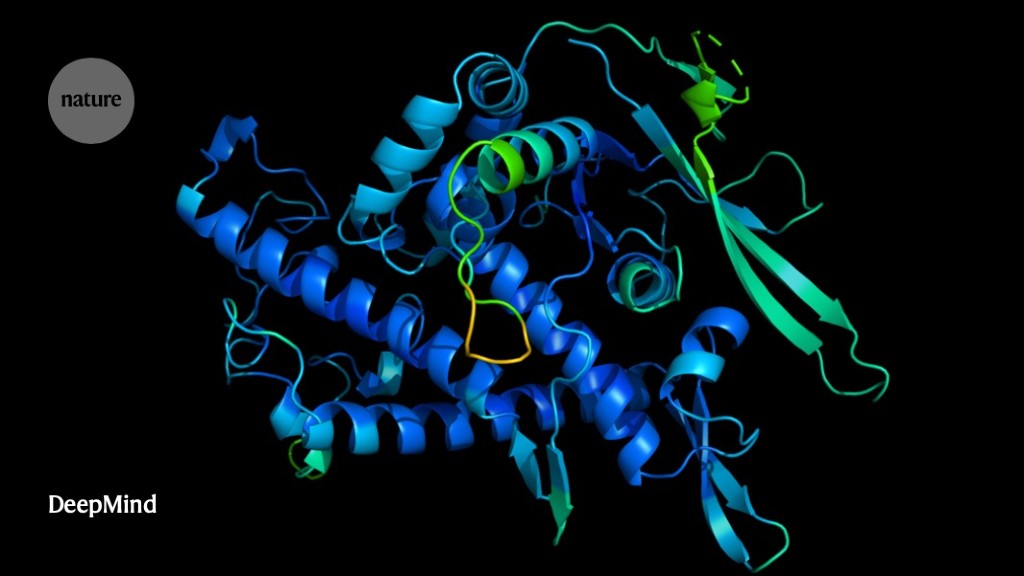
Towards the end of 2020, Google DeepMind announced that they developed an AI network (AlphaFold) that determines a protein’s 3D shape from its amino-acid sequence.
The ability to accurately predict protein structures from their amino-acid sequence would vastly accelerate efforts to understand the building blocks of cells and enable quicker and more advanced drug discovery. AlphaFold has been recognised as a solution to this grand challenge by the organisers of the biennial Critical Assessment of protein Structure Prediction (CASP).
CASP was founded in 1994 by Professor John Moult and Professor Krzysztof Fidelis as a biennial blind assessment to catalyse research, monitor progress, and establish the state of the art in protein structure prediction. It is considered the gold standard for assessing predictive techniques. After DeepMind’s revelation of its model and accuracy rate this year, Moult stated “In some sense the problem is solved.”
Professor Venki Ramakrishnan, the winner of the 2009 Nobel Prize for Chemistry said “this computational work represents a stunning advance on the protein-folding problem, a 50-year-old grand challenge in biology. It has occurred decades before many people in the field would have predicted.”
Merve Hickok
by Admin | Dec 30, 2020 | News
NOMINATION
History of AI 2020
In the last days of 2020 Artificial Intelligence and Democratic Values: AISCI-2020 report was published. The report was prepared by the Center for AI and Digital Policy at the Michael Dukakis Institute and conducted by a team of international experts.
The report is first of its kind as a comparative review of national AI policies. 30 countries were reviewed in terms of their endorsement and implementation of OECD AI Principles within their national AI strategies and public implementations. It will serve as the baseline for future work and as one scholar (Mireille Hildebrandt) called it is “a trove of materials to enable mutual learning strategies instead of reinventing the wheel.”
The report also amplifies the AI Social Contract Index and CAIDP’s mission –“to promote a better society, more fair, more just —a world where technology promotes broad social inclusion based on fundamental rights, democratic institutions, and the rule of law.” It will pushes the boundaries and expectations from governments, and seeks seeks to build a multi-stakeholder, inclusive society in all aspects of life across politics, government, economics, business, and industry.
The methodology developed for the report draws on the work of international human rights organizations and data protection experts, and provides a clear ranking for each country. The AI Index 2020 encourages all countries to make real the promise of AI that is trustworthy, human-centric, and provides broad social benefit to all.
Merve Hickok
by Admin | Dec 25, 2020 | Chronicles, News
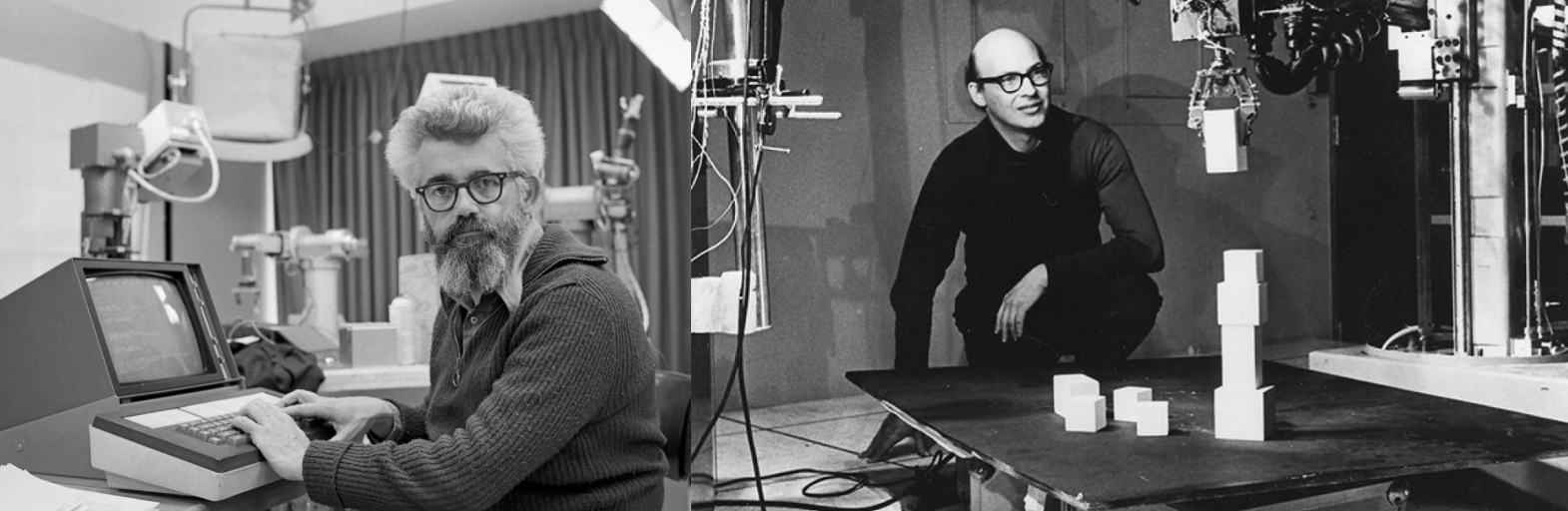
This week in The History of AI at AIWS.net – the MIT AI Lab was founded by John McCarthy and Marvin Minsky in 1959. This marked the beginning of coordinated AI research at MIT. The lab focused on researching and developing AI. The Lab went through several iterations and in 2003 merged with the Laboratory for Computer Science to become the MIT Computer Science and Artificial Intelligence Laboratory.
Marvin Minsky was an American cognitive and computer scientist. He penned the research proposal for the Dartmouth Conference, which coined the term “Artificial Intelligence”, and he was a participant in it when it was hosted in 1956. Minsky would make various contributions to the development of Artificial Intelligence. In terms of popular culture, he was an advisor to Stanley Kubrick’s acclaimed movie 2001: A Space Odyssey. He won the Turing Award in 1969.
John McCarthy was an American computer scientist. He, along with Minsky and others, co-wrote the proposal for the Dartmouth Conference, and participated in it. McCarthy also developed the Lisp programming language. Additionally, he also influenced various tasks in computer science. He spent most of his career at Stanford after working at Dartmouth and MIT. McCarthy won the Turing Award in 1971.
The History of AI Initiative considers the founding of the MIT AI Lab as an important event due to its role in the contribution to AI development. Furthermore, Marvin Minsky and John McCarthy are considered some of the founders of Artificial Intelligence research.
On this day and post, the HAI Initiative would like to wish readers a Merry Christmas and hope for the development of Artificial Intelligence to greater heights.