by Admin | Mar 11, 2022 | Chronicles, News
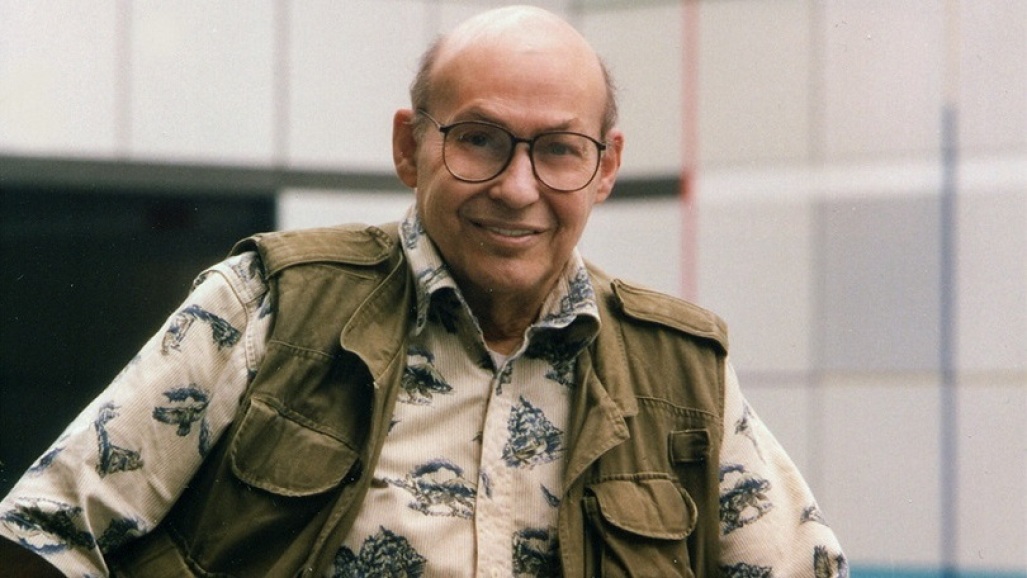
This week in The History of AI at AIWS.net – in 1970 Marvin Minsky was quoted in Life magazine, “In three to eight years we will have a machine with the general intelligence of an average human being.”
Marvin Minsky was interviewed by Life magazine in 1970 by journalist Brad Darrach, who was writing an article on Shakey the Dog, an early mobile robot built at Stanford. Minsky made this bold claim, and further added on that “If we’re lucky, they might decide to keep us as pets.” This statement was meant as a warning to not let intelligence computers control vital systems.
Marvin Minksy was an important pioneer in the field of AI. He penned the research proposal for the Dartmouth Conference, which coined the term “Artificial Intelligence”, and he was a participant in it when it was hosted the next summer. Minsky would also co-founded the MIT AI labs, which went through different names, and the MIT Media Laboratory. In terms of popular culture, he was an adviser to Stanley Kubrick’s acclaimed movie 2001: A Space Odyssey. He won the Turing Award for his influence on AI in 1969.
Marvin Minsky’s quote and this interview highlighted the popularity and mainstream attention AI have received in the ‘60s and ‘70s. Furthermore, Marvin Minsky was one, if not the, most important figure in the development of Artificial Intelligence. His writings and sayings during the rise of AI in the 60s are still deliberated about to this day.

by Admin | Mar 4, 2022 | Chronicles, News
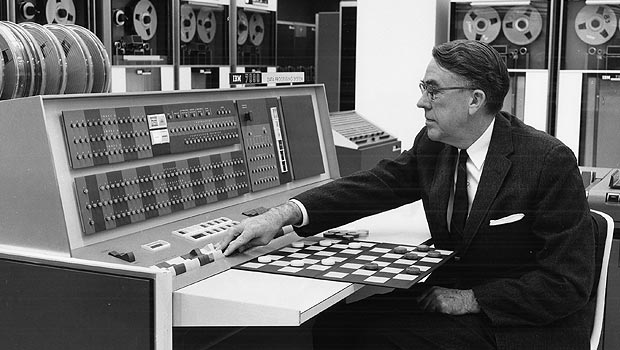
This week in The History of AI at AIWS.net – Arthur Samuel popularises the term “machine learning” in 1959 in his article “Some Studies in Machine Learning Using the Game of Checkers”.
Arthur L. Samuel was an American computer scientist. He was a pioneer in the field of computer gaming and artificial intelligence. Born in 1901, he studied at the College of Emporia for his Bachelor and MIT for his Master. His Samuel Checkers-playing Program was one of the first successful self-learning programs and was a basis for this article that coined “machine learning”. He was notable for his works at IBM and Stanford. Samuel won the Computer Pioneer Award in 1987 for his contributions to computer science and AI. He passed away in 1990.
“Machine learning” is the study of computers that can self-improve through time and experience. It is often considered a part in the development of artificial intelligence. Although the study has existed before 1959, with this program and also developments such as the Dartmouth Conference, helped the field become more active. A subset of machine learning, deep learning, has also been gaining traction lately.
The article that he wrote on this program and “machine learning” can be read and downloaded here.
This is important to the history of AI in that it popularises the term “machine learning”, which is an important aspect of artificial intelligence. Arthur Samuel is also one of the pioneers in computer science and AI.
by Admin | Feb 25, 2022 | Chronicles, News
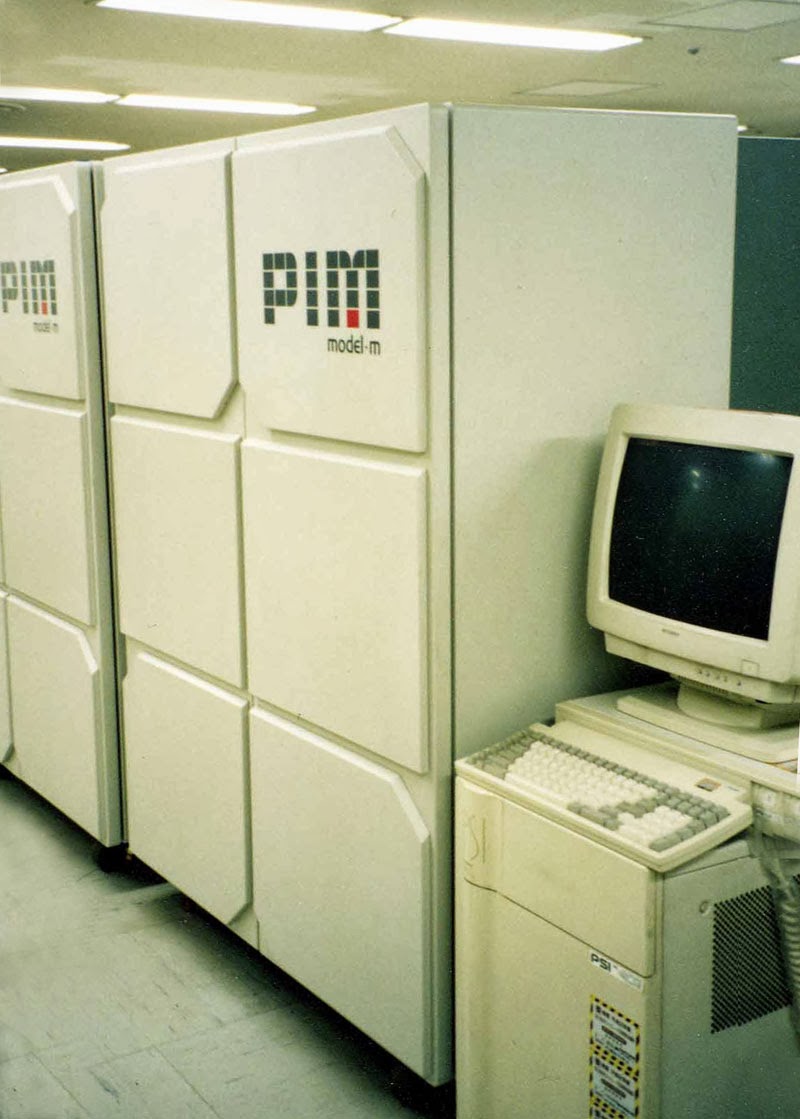
This week in The History of AI at AIWS.net – the end of the first AI Winter in 1980. This was due to the adoption of “expert systems” into corporations in the 90s and Japan’s Fifth Generation Computer project.
Expert systems are computer systems that can emulate man’s decision-making abilities. They are designed to solve problems through reasoning and they can perform at the level of human experts. The first expert system was SAINT, developed by Marvin Minsky and James Robert Slagle. Lisp machines are designed to be able to run expert systems. Lisp machine runs the Lisp programming language, and in a way, it was one of the first commercial and personal workstation computer.
Japan’s Fifth Generation Computer program was created and funded by the Japanese Ministry of Trade and Industry in 1982. The goal of this program was to create computers with massively parallel computing and logic programming and to propel Japan to the top spots in advanced technology. This will then create a platform for future developments in AI. By the time of the program’s end, the opinion of it was mixed, divided between considering it a failure or ahead of its time.
The HAI initiative considers the end of the frst AI Winter as a significant marker in AI history. It ended the thaw in AI development and revitalised the field, leading to more pioneering and research.
by Admin | Feb 19, 2022 | Chronicles, News
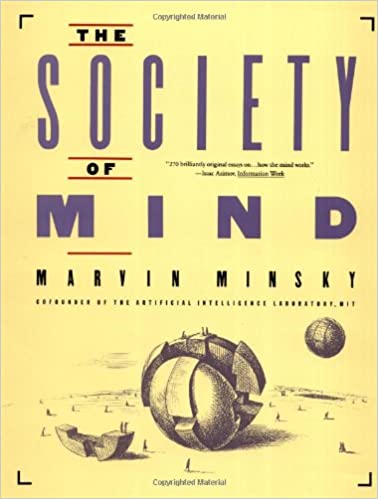
This week in The History of AI at AIWS.net – Marvin Minsky publishes The Society of Mind in 1987. This book is a theoretical description of the mind as a collection of cooperating agents.
Marvin Minsky was an American cognitive and computer scientist. He penned the research proposal for the Dartmouth Conference, which coined the term “Artificial Intelligence”, and he was a participant in it when it was hosted in 1956. Minsky would also make significant contributions to artificial intelligence, both in the study of the field and in popular culture. He won the Turing Award in 1969.
The Society of Mind is a book on the theory of “Society of Mind”, which came out of Marvin Minsky’s own thinking. In the book, Minsky describes the mind as a collection of mindless but cooperating “agents”. He first started developing the theory with Seymour Papert in the 1970s, but worked on it and published the book at a later point. The book is viewable at the Internet Archive.
Although the book does not directly reference or influence the development of artificial intelligence, it displays the theoretical dimensions of Marvin Minsky, the AI pioneer. The book also gives a glimpse into Minsky’s thinking in building artificial intelligence. Thus, the HAI initiative considers this an event in the history of AI.
by Admin | Feb 11, 2022 | Chronicles, News
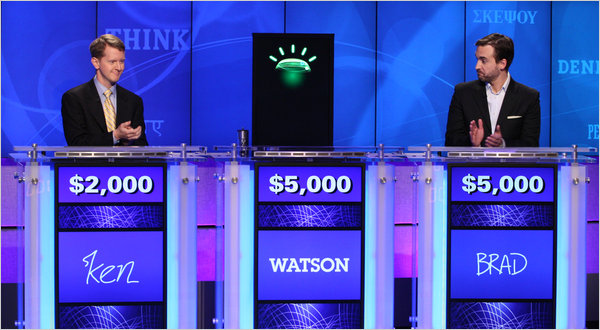
This week in The History of AI at AIWS.net – IBM “Watson” machine defeats 2 human Jeopardy! champions. The machine went on the show on February 16th, 2011 and faced off against Ken Jennings and Brad Rutter, previous winners of the famous game-show.
The show was taped in Janaury of 2011 but was not aired until February of the same year. Instead of a regular episode, this showdown was played out over three parts, concluding on February 16th. It was filmed at one of IBM’s research lab. More than just a publicity and PR display, it was a vindication of the progress Artificial Intelligence has made in the past decades.
“Watson” is a question-answering computer system, developed by IBM as a part of their DeepQA project. David Ferrucci, an American biologist and computer scientist, headed the development of Watson as principle investigator with a research team. Watson is named after IBM’s founder and first leader, Thomas J. Watson. After its success on Jeopardy, Watson was first utilised in helping lung cancer treatment at the Memorial Sloan Kettering Cancer Center in New York City.
The New York Times covered this event on its website. The article can be read here. A clip of Watson’s victory can be viewed here.
The HAI initative considers this an important development in the history of AI due to its publicity and notability as the culmination of a research project in artificial intelligence.
by Admin | Feb 6, 2022 | Chronicles, News
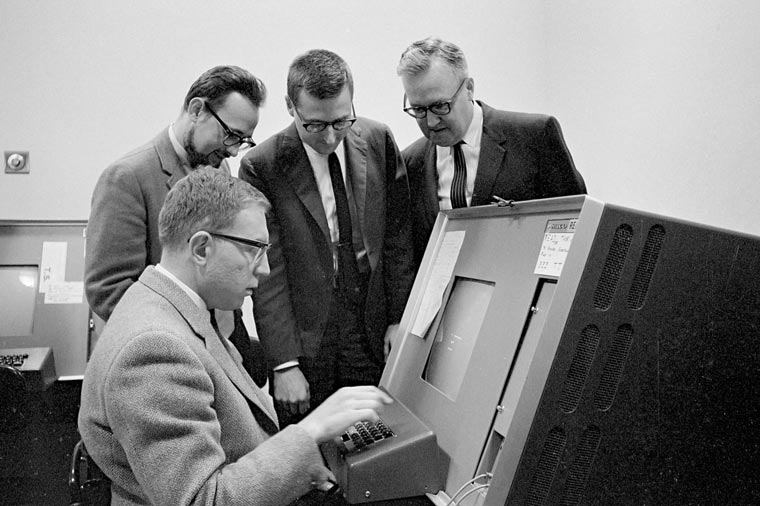
This week in The History of AI at AIWS.net – Edward Feigenbaum formally introduces expert systems in 1965. He was a part of the Stanford Heuristic Programming Project, which contained other notable AI pioneers.
Edward Feigenbaum is an American computer scientist focused on Artificial Intelligence. He studied at Carnegie Mellon University for both his B.S. and Ph.D., with Herbert Simon, an AI pioneer, as his doctoral advisor. He would go on to work at UC Berkeley and Stanford, the latter where he became Professor Emeritus of Computer Science (since 2000). Feigenbaum received the ACM Turing Award in 1994 with Raj Reddy for pioneering in AI and demonstrating its commercial potential.
The Stanford Heuristic Programming Project included members outside of Edward Feigenbaum such as Bruce G. Buchanan, Joshua Lederberg, and Carl Djerassi. They are most notable for the MYCIN experiments. Many of their papers and research can be read here.
Expert systems would become the basis for future AI products and developments. Furthermore, the members who were a part of this project would also work on other pioneering projects in A. Thus, the HAI initiative sees this event as a marker in the history of AI.